An Anfield derby too soon?
In nearly 12 years as Everton manager, David Moyes was never able to taste victory at Anfield. In his quest to finally get that particular monkey off his back, Wednesday might come too soon but the plan is to build towards a day where he finally can
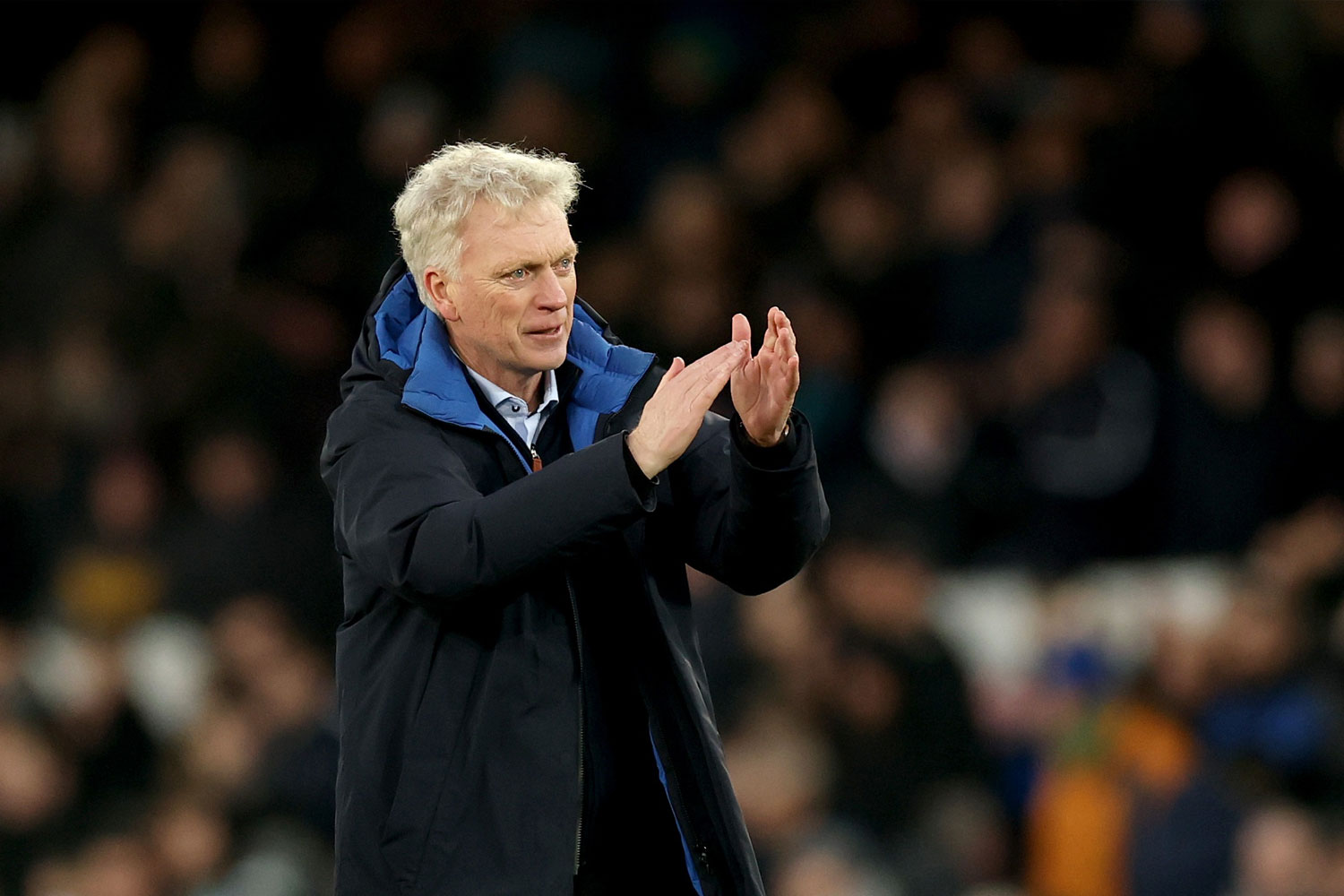
Perhaps the biggest knock against David Moyes during his first spell at Everton was his inability to definitively break the proverbial glass ceiling that existed between the Blues and the quartet of clubs nicknamed the “Sky Four”. He managed it once, of course, in that wonderful 2004/05 campaign when the Club finished fourth in what was still known then as the Premiership, before falling agonisingly short of qualifying of the group stage of the Champions League proper the following season.
But that frustrating barrier also manifested itself in domestic results away from Goodison Park. Though he oversaw three successive victories at the Etihad Stadium over the emerging power of Manchester City (who, together with Tottenham, would form the “Big Six” that has dominated English football over the past decade or so) Moyes famously failed to win on the grounds of Arsenal, Chelsea, Liverpool or Manchester United between 2002 and 2013.
The Scot had done an excellent job of initially stabilising a club that had been reeling from years of crisis and routinely struggling in the wrong half of the top flight and then establishing the Toffees as a perennial top-eight side and competitor in Europe but he seemed incapable of pushing Everton to the next level.
There had, of course, been mitigating circumstances — a two-year period of severe austerity between 2010 and 2012 that halted the procession of impressive signings Moyes had made over the years, had been compounded by the loss to long-term injury of goal machine, Yakubu. However, his regrettable “knife to a gunfight” analogy prior to the 2-0 defeat to City in September 2011, that began what currently stands as a 14-year winless sequence for Everton in Eastlands, came, for some Evertonians, to encapsulate Moyes’s “oh so nearly” tenure and the sense that he might have taken the Club has far as he could by the time he left to succeed Sir Alex Ferguson at Manchester United.
12 years on, Moyes is back at Everton standing with the Club at the threshold of a potentially exciting new dawn. That much more experienced and accomplished, the 63-year-old Glaswegian will partner with a reshaped recruitment setup to use the financial backing of The Friedkin Group to build a new team with the aim of once again competing at the top end of the table.
And it’s a Premier League that feels more open than at any time since Leicester shocked the footballing world by winning the title in 2016. With an air very reminiscent of Claudio Ranieri’s spirited team of 10 years ago, Nottingham Forest have gone from narrowly avoiding relegation last season to gatecrashing the top four this term. United and Tottenham are languishing with Everton in lower mid-table mediocrity while the likes of Brighton, Bournemouth and Fulham remain in the hunt for automatic Europa League qualification. Newcastle have already broken the big six’s stranglehold on the League Cup by beating Liverpool at Wembley last weekend and it’s possible that for only the second time since 2013, a team from outside that cabal will the FA Cup.
As we prepare to move into that fabulous new home on the banks of the Mersey, both Moyes and Everton will be looking to lay the foundations for future success in the transfer market this summer, with the hope being that the manager can build on the start he has made to his second stint at boss by breaking the top half of the Premier League next season as a preliminary step.
Part of that medium- and long-term strategy will, of course, be to be competitive against all opponents, regardless of venue, and the test for the evolved David Moyes will be to take his refashioned team to places like Anfield, the Emirates, the Etihad and Stamford Bridge and start picking up wins where he couldn’t before.
He gets an early opportunity to one-up his first spell at Everton this Wednesday when the Toffees cross the Park to Anfield but they will do so in the familiar role as unquestionable underdogs. If Moyes is to win on the home ground of the old enemy for the first time in his career, it will be a pleasant shock rather than anything grounded in expectation.
Liverpool may have looked jaded in recent games as they were deservedly knocked out of the Champions League by Paris Saint-Germain and beaten by the Barcodes in the Carabao Cup Final but they remain the presumptive title winners by what will, in all likelihood, be a sizeable margin as Arsenal and City have fallen away this season.
Although the majority of the Reds’ players will have been involved in international fixtures over the past fortnight, Arne Slot’s men will have benefited from the break in Premier League action and the fact that they weren’t in cup action this weekend either. Furthermore, Alisson Becker and Ryan Gravanberch have a decent chance of being passed fit, meaning that Slot will only be without Trent Alexander-Arnold, Conor Bradley and Joe Gomez.
Everton, meanwhile, have had to muddle through in recent weeks without some of their most important players. Dominic Calvert-Lewin has been out since late January and may not be available for another month, Iliman Ndiaye has missed the last five games with a knee injury and Dwight McNeil has been sidelined since December.
And they lost another over the international break in the form of Vitalii Mykolenko whose thigh injury isn’t as bad as first feared but it will likely keep him out of the derby and the home game against Arsenal on Saturday. Assuming Moyes doesn’t opt for a back five, Ashley Young will be ready to step into the breach and should ensure some continuity in that part of defence where he will be charged with keeping the Reds’ biggest danger, Mohamed Salah, quiet.
Further forward, the manager will at least have some options, with Carlos Alcaraz continuing to make his case as the starter behind the centre-forward ahead of Abdoulaye Doucouré and all three of Armando Broja, Beto and Youssef Chermiti now vying for the responsibility of leading the line. The hope is that competition for places there will lead to greater output from the forward line, rather than having to rely on the likes of Jake O’Brien for vital late equalisers.
As Everton showed in the thrilling 2-2 draw in the Goodison derby and in their welcome, but unexpected, victory at Brighton, they can now give anyone a game on their day. They have, however, become draw specialists following those three straight wins in Moyes’s first fortnight back in the hot-seat. Starting with the reverse fixture against Liverpool, the Toffees have tied five of their last six games, some of them in hugely frustrating fashion and those dropped points have kept the Club in 15th place rather than allowed them to grab the coat tails of Brentford and Crystal Palace in 11th and 12th place.
If Beto can re-find his scoring boots or Broja can make a long-awaited impact with his first goal, the potential for a repeat of the 1999, when the late Kevin Campbell further cemented his place in Toffee folklore with the only goal, is always there. Eventually, the idea of going toe-to-toe with the Reds on their patch will be a realistic one, but for Moyes and his quest to finally get this particular monkey off his back, Wednesday might represent an Anfield derby too soon.
During his first spell, when Tim Cahill could be relied upon to come up with a crucial goal, Everton came up with the odd laudable draw across the Park and another, which would extend the current run to 10 unbeaten, would be a tremendous result.
Liverpool vs Everton — 8pm, Wednesday 2 April, 2025
Referee: Sam Barrott
VAR: Paul Tierney
Reader Responses
Selected thoughts from readers31/03/2025 12:02:44
I always thought we were fortunate and not ready when we qualified for the Champions League qualification round.
We seemed to limp towards it as we stuttered and stumbled in the run in. But every time we slipped up, Liverpool returned the favour.
I still think it is the lowest points tally to get into the Champions League, and had Liverpool won just one more match, they would have done us on goal difference. Ours was slightly negative.
We can go into Wednesday night's match with confidence and nothing to fear. Just don't go missing or hiding Everton.
31/03/2025 12:55:16
I note the referee has taken charge of 2 RS games - Southampton away and Plymouth away. He's issues 13 yellows in total - 7 at Saints, 4 for the RS and 6 at the Pilgrims, 2 for the RS. He's taken charge of one EFC game - Villa at home issuing 3 yellows, 2 for EFC. Sounds like a stickler for the rules, does Sam Barrott !
31/03/2025 15:19:21
3 months ago we would have faced this fixture with horrible trepidation. At least now we can have some belief that a positive result is achievable. Wouldn't it be wonderful if we could turn over the Redshite and build upon their misery from PSG and from Wembley. The start of an almighty collapse maybe ? We have to dream.
31/03/2025 18:12:41
I never watch the Reds but from what I heard and read, their recent stumbles have been largely put down to a collective tiredness amongst the players. Therefore slight trepidation over facing them after they’ve had two weeks to recharge the batteries, nonetheless COYB.
31/03/2025 23:04:22
I honestly feel, that, now that we have secured our premier league status, ( forget the mathematics!), and given our unbeaten run, we are more galvanised and more than well capable of bringing the game to them.
Let’s not forget, we are at home… only a five minute walk!
We are buoyant at the moment and with all respect considered, I can’t expect less than a Draw.
respect ! Yes! It’s what you show your opponent, before putting them to the sword !
01/04/2025 16:05:57
Is there any chant or song telling the Norwegians it's "our park"?
I think that'd be hilarious. I don't know many of the songs or chants, but just in case someone tells me how plastic I am, I'm asking for a friend.
02/04/2025 01:01:29
I am not a tea leaf reader when it comes to press appearances but Moyes may be messing with the Reds' heads. It is true to Moyes' old habits which makes it even more effective. It may get reinforced in the first 20 minutes while the RS take initiative.
If we are still even after that first wave we may then see our players taking some chances and grow into the game. If Alcaraz starts, using Broja would be my preference. Beto to bruise them up later and limited time for Chermiti as he is somewhat a hothead. With Young and Obrien, we cannot afford overworking possession around their box. It should be rather direct in attack (for you Paul). That should suit Alcaraz and Doucoure.
Jordan needs to be the goalkeeping Collossus he can be on big occasions. I would absolutely love to see Garner elevate his game and find some stirring forward passes to thrill the Blues and cause the Red Shite to wet themselves.
1-2 Blues. UTOFM!
02/04/2025 12:10:17
I agree with those sentiments Dale but I have the impression that Garner isn't capable of raising his game as you would wish. I might be wrong but I see him as the weak link in midfield unfortunately and think he may need replacing in due course.
02/04/2025 20:31:59
Still in this Peter. Will Moyes open up a can of whoop ass?! We will see.
02/04/2025 21:26:55
At 63 mins, still asking myself WTF is he waiting for to haul off Harrison and Doucore.. The Calamity Bros!
02/04/2025 21:28:37
Doucoure and Harrison have proved their non-worth this season. If it wasn't for all the injuries, I'm sure they wouldn't be playing
02/04/2025 21:30:20
Harrison is sporting a new Pony/ Donkey Tail.
Honestly, I believe that some players think that they only have to change their Barnet, in order to up their game.
02/04/2025 21:47:34
Paul Conway, the Donkey tail is reflecting his style of play
02/04/2025 22:12:37
very disappointing 2nd half.
Moyes finished our last game, which turned out to be, our best starting eleven, by Bringing on Broja, Tim and Chermiti.
so, why does he wait until near the end to bring on the same protagonists ?
The only positive, that I could draw from this game is, the fact that Jake O’OBrien, only cost 17 million!
02/04/2025 23:49:35
Perer Hodgson
You were spot on about Garner.
He ended up getting substituted.
He has a very limited game, as most of our players.
I thought Ducoure had an atrocious game and should have been hooked, at the same time as Harrison.
I still can’t believe that I’m still typing that name Harrison.
A player, for whom, in my opinion, looks odd in the famous Royal Blue shirt.
He had a golden opportunity, when he found himself, with plenty of space to cross, or pass, but, in true Harrison fashion, over- hit it, while Alcaraz,, unmarked in a great position, was crying out for it.
What an Odious Twat that Jota is!
02/04/2025 00:13:55
Peter's skepticism wins. I am too worn out from this season to get livid about it but Moyes had some credit to play with after that unbeaten streak. Now I'm worried about how our more creative players will respond to his style. He needs to give some of the new arrivals chance to show their worth now that regulars have fully demonstrated their limits.
Oh well, after supporting Dyche and blaming the squad, the honorable thing is to hold fire until after the summer transfer business. I might.
03/04/2025 00:33:41
It is hard to see what successive managers have seen in Jack Harrison. He is odds on to turn over possession every time he receives the ball. He is the main reason that we find it so hard to play through midfield. Otherwise I think that the lads did well.
Add Your Thoughts
Only registered users of Evertonia can participate in discussions.
Or Join as Evertonia Member — it takes just a few minutes and will allow you to post your thoughts on artices across the site.
17 Comments ↓