Everton’s deficiencies put focus back on incomplete summer window
This weekend's opponents may have been shopping in different markets with more modest goals than Everton over the summer but Sunderland's early-season form is vindicating their more holistic approach
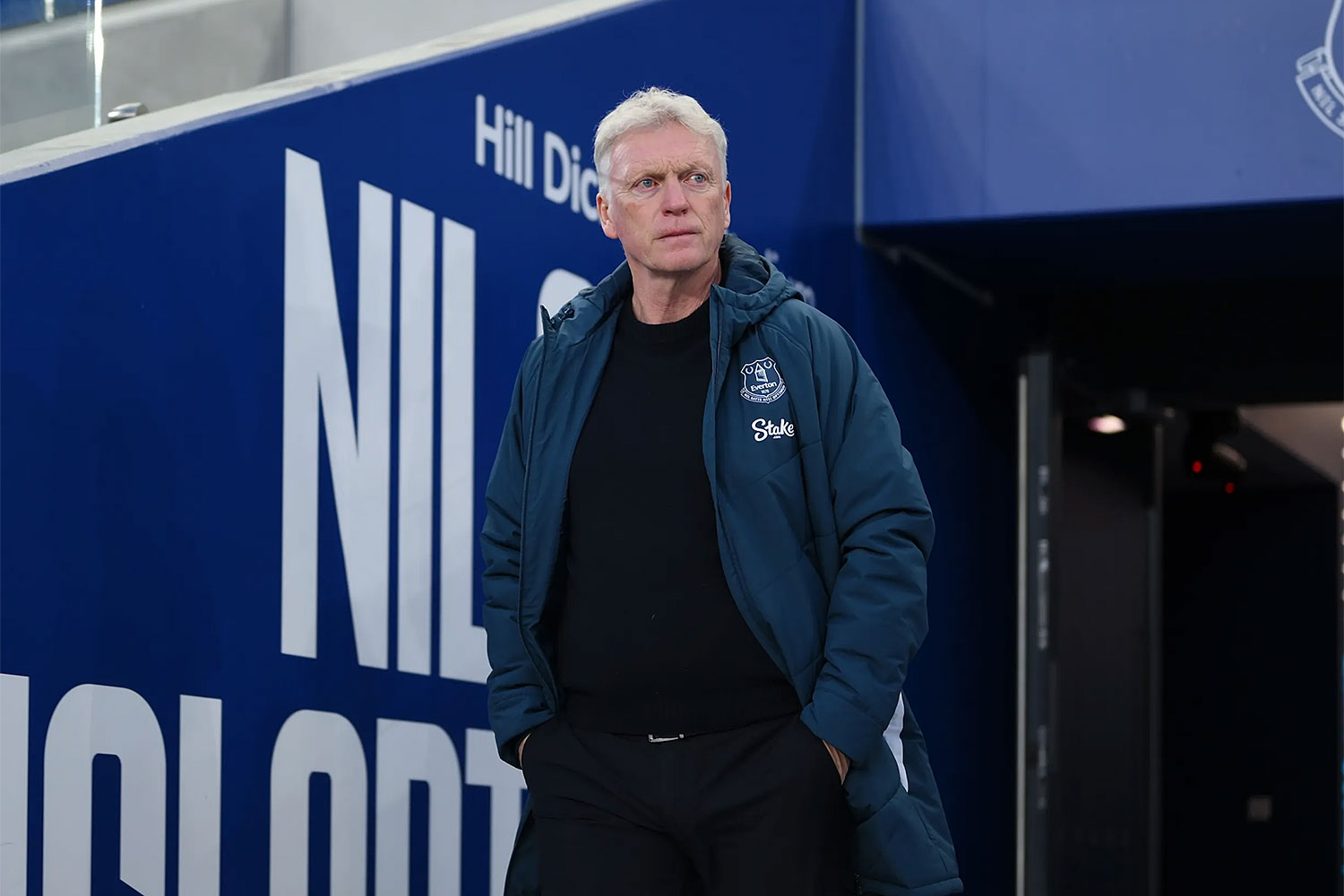
It’s nine years since Everton last made the journey they will undertake on Monday evening to the Stadium of Light and the twists and turns that afflicted both clubs in the intervening years have spawned reams of newspaper column inches, books chronicling the drama, and, in Sunderland’s case, a compelling Netflix documentary.
Representing the mirror image of the dismal 3–0 reverse they had suffered to Sam Allardyce’s Black Cats a few months earlier, the Toffees’ victory by the same scoreline in September 2016 appeared to be further evidence that they were finally on the upswing with new boss Ronald Koeman at the helm.
The Dutchman was in the midst of an unbeaten start to his tenure at Goodison Park and victory over Middlesbrough the following weekend put Everton second in the Premier League table. Of course, the Blues would finish seventh that season and qualify for Europe — step one in Koeman’s bid to have the club in the Champions League within three years — but 13 months later he was gone.
So, too, was David Moyes from the northeast where his single season with Sunderland had plumbed surprising depths even in view of his struggles at Manchester United and Real Sociedad. With Allardyce having fulfilled his “fire-fighter” remit by keeping the Wearsiders in the top flight at bitter rivals Newcastle’s expense with that dramatic win over the Blues, the Scot had taken over in the summer of 2016, hoping to repeat the relative success he had had at Goodison over 11 years between 2002 and 2013.
Sunderland under Moyes, however, in the 2016-17 season were an unmitigated disaster and it was the campaign that sent this proud old institution into a tailspin that would see them plummet into League One amid the chaos laid bare in Sunderland Til I Die. They would finish rock bottom the league in May 2017 and despite initially signalling his desire to stay on to try and lead the Black Cats back to the Premier League, Moyes resigned not long afterwards.
As he departed, Allardyce had warned: "We've just secured the financial side of being in the Premier League, which is the most important thing. Now it's how wisely we spend it. The next set of recruitment is crucial." Curiously, though, for a manager whose first spell with Everton was characterised by stellar recruitment, Moyes’s work in the transfer market as Sunderland boss failed to bring about the stability the team needed.
Club-record signing Didier Ndong failed to make the grade while acquisitions like Papy Djilobodji, Jason Denayer, Javier Manquillo and Donald Love were a collective disappointment. And when Moyes, as he had done as United’s gaffer, looked back to his Everton days in trying desperately to improve the situation in the January window by signing Darron Gibson, Bryan Oviedo and Joleon Lescott, he got little production out of three players beset by injuries and who managed just 16 starts between them over the second half of the season.
The result was a campaign that yielded just six wins, 24 points and the remaining two of the three big northeast clubs in Sunderland and Boro going down while Newcastle made the opposite move, gaining promotion back too the Premier League under yet another future Everton boss, Rafael Benitez.
Nine seasons later, as an unquestionably big club with supporter passion to rival our own, Sunderland are back where they belong. Not only that, they have made a flying start to 2025/26 that, barring a cataclysmic loss in form, should already have guaranteed they will stay up this season rather than go straight back to the Championship as the last six promoted teams have down. 17 points from nine matches has them sitting in the top four, above pre-season title favourites Liverpool and Manchester City for the time being.
As Moyes takes his current charges to the Stadium of Light on Monday evening having seen their own positive start to the campaign fizzle out, it’s once more hard to avoid the question of recruitment. Everton came into the close season with the huge task of having to replace a dozen or so departing players with a significant but not unlimited budget and without having been able to assemble all the component parts of a new management and player recruitment team.
Nevertheless, the nine signings they were able to make — seven outfield players and two goalkeepers — were widely considered to have represented a successful window’s work. Jack Grealish and Kiernan Dewsbury-Hall added skill and star quality, Carlos Alcaraz somewhat unrefined thrust and purpose in attacking midfield, while Thierno Barry, Tyler Dibling, Merlin Röhl and Adam Aznou promised raw but game-ready precociousness.
And early results — a 2–0 win over Brighton on Hill Dickinson Stadium’s big opening day, a mostly electric 3–2 victory at Wolves and the raucous delirium of the last-gasp triumph over Crystal Palace last month — suggested that Moyes had sprinkled just enough quality on the team he had inherited from Sean Dyche in January to make a concerted push this season, not only for a top-half finish but, perhaps, for surprise qualification for Europe.
But, just like in Carlo Ancelotti’s anti-climactic and only full season in charge five years ago, Evertonians have seemingly been mocked by the footballing gods for daring to dream a little. It’s far too early to dismiss those ambitions as dead in the water but a run of just one win in seven in all competitions, including a miserable cup exit at Wolves, the failure to beat Aston Villa and West Ham at Bramley-Moore Dock and last Sunday’s heavy 3–0 loss at the hands of Spurs, has certainly realigned expectations and tempered the optimism.
While questions are being asked of Moyes’s infamous inflexibility and Everton’s general style of play compared to many of their peers, at the heart of the problem are glaring problems at full-back and up front that were not addressed over the summer.
Both Moyes and new CEO, Angus Kinnear, have been at pains to insist that not all of the team’s issues were going to be solved in one transfer window and that the nine players they did manage to land were an achievement in themselves. (For their part, though, and acknowledging their needs on their return to the big time, Sunderland acquired 15 and appear far better rounded and balanced than Monday’s opponents from Merseyside. Add in the inspiration of head coach Régis Le Bris and you have the early success story of the season so far.)
They would, no doubt, point to the potential of their younger recruits as forming the foundation for future success, perhaps for this season as they settle in but certainly for the years ahead. But it’s clear that for whatever reasons, the club were unable to strike a balance between the needs of the here and now and the broader reconstruction which makes for supporter frustration and poses a risk in a season where the Premier League looks to be disconcertingly competitive.
Jake O’Brien, a centre-half doing his level best as a right-back, looks an increasingly ill-fitting round peg in a square hole and Vitalii Mykolenko’s limitations going forward remain a liability in an era where full-backs play a huge role in the attacking parts of the game. With the manager deciding that Azou is some way short of being ready for first-team action of any kind, Nathan Patterson clearly un-fancied before he was injured, and Seamus Coleman semi-retired, back-ups on both sides of defence are in unforgivably short supply.
Up front, meanwhile, Beto’s goals have dried up and Barry’s introduction to English football has been sporadic and thus far disappointing, albeit with both strikers at the mercy of a team hampered by those issues at full-back and a midfield that hasn’t found a consistent, chance-creating groove.
Youssef Chermiti’s relative youth and struggles to hit the ground running at Rangers suggest he hasn’t been a great loss but the absence of a more experienced and reliable third option feels more and more like a critical oversight.
The vast majority of Everton’s spending was undertaken in the summer so while the new recruitment and player development team of Moyes, Kinnear, Nick Cox, James Smith and Chris Howarth will be monitoring the availability of potential targets on a constant basis, it’s unlikely the club will be making any significant signings in January. Not unless a solid loan option or attractive permanent deal comes across their radar.
With that in mind, the solutions will have to come from the existing players and the coaching staff, with Moyes, in particular, needing to assess what worked so well when Everton have looked promising this season and how he can better leverage the current squad.
With the attacking midfield trident of Iliman Ndiaye, Grealish and Dewsbury-Hall seen as vital and the manager leaning on Beto’s experience even while he struggles to replicate his purple patch from last season, Dibling, Barry and Alcaraz remain largely underused. All three will surely be frustrated at their lot, further complicating the task of integrating them into a misfiring team lacking confidence after recent results.
Confidence won’t be lacking in the Sunderland ranks and on current form and for that reason, Monday’s game could be every bit as difficult as the recent trips to the Etihad and Anfield. It also provides the perfect opportunity for Moyes and Everton to pop Le Bris’ balloon and get their season back on the rails. Do that, re-instil some self-belief and put some distance between the Toffees and the bottom three and the misgivings about that incomplete summer window, at least in the context of the current campaign, won’t nag quite so much.
Reader Responses
Selected thoughts from readers01/11/2025 17:21:20
DM did say that the first transfer window won’t solve our issues.
Unfortunately the full back issue, and goal scorer issues are more acute than last season, so we have got worse in those areas, rather than improving, or even treading water.
I hope Monday night can be positive, because my earlier optimism is sinking.
01/11/2025 19:12:57
I think the focus is also very much on the ability of Moyes to manage the resources he has available to good effect.
01/11/2025 19:42:05
As I mentioned in a thread at the beginning of the season the I said the summer window was a disappointment and showed poor planning, people said I was ridiculous, why? because we got Grealish and Dewsbury Hall?
No signings in two absolute key areas was very poor, no RB no CB, Right back being an absolute must no ifs no buts and there was plenty available. Walker Peters would have done even.
Who ever is in charge of recruitment and scouting needs to walk as it’s always sub standard, you see teams like Brentford, Bournemouth and Brighton signing these players who are relatively unknown and are ready to play, straight in the first team and perform and settle very quickly, Kayode RB at Brentford looks very good another one we missed.
This has been going on for years.
01/11/2025 20:00:35
Harry, Walker-Peters is symbolic of the balance I believe the club tried to strike over the summer. He was available but as a free transfer, he would have been expensive wage-wise. At 28, we’d have signed a player wanting close to six figures a week, who’d have little sell-on value and who might not have met Moyes’s bar in terms of physical profile and ability.
I don’t have the scouting knowledge to know what other alternatives there might have been (it’s a pity we missed out on Wesley to our step-siblings in Rome) but you have to assume there were others. Hopefully we’re getting them lined up for the next couple of transfer windows.
01/11/2025 20:48:09
Lyndon,
Walker Peters is on 55,000 a week apparently so easily affordable, not my first choice but better than what we have and has pace and can do a job.
Dewsbury Hall is closer to six figures although he wasn’t a priority.
03/11/2025 00:48:40
It is the way it is. Hope on the horizon, but a season in progress.
Tomorrow its a chance for Everton to, reinstall for this season!
😀💙
03/11/2025 06:13:51
The fact that Sunderland just had a massive win away from home and are now up against a much more winnable team at home, makes me think we can get something from this.
"After the Lord Mayor's show" I think the old saying is.
I'd like to see Alacaraz and Rohl used tonight, I've been unimpressed with KDH in the no.10 position thus far but he's obviously a good player overall and I can't see Moyes leaving him out, so hopefully he turns up tonight.
03/11/2025 19:42:36
Barry starts.
Come on son. This could be your night
03/11/2025 22:25:10
A point at Sunderland will do. I just hope Ndiaye’s injury isn’t bad - tonight proved he’s our main goal scorer.
03/11/2025 22:56:39
The Curious Case of Tyler Dibling !
04/11/2025 00:19:50
Crap crap crap tonight - fast losing patience with Moyes
04/11/2025 01:14:49
Ben, I thought the team was good for the first half hour. Then crap, crap!
04/11/2025 06:51:23
Well unfortunately it wasnt to be Barry's night. His howling sitter will get all of the headlines again. The lads already fragile confidence must be shattered... But he's only missed one.
At the risk of sounding like a broken record. I'm going to say it again. James Tarkowski is an absolute liability. Match after match... After match. He is costing us. Not only did he have a very poor game against a very poor forward line. He manage's to squeeze in his now customary party trick of backing up onto Pickford's toes and blinding him to any kind of shot. If James Tarkowski is sitting on the bench, Sunderland don't score.
He wont be dug out and he wont be made accountable because in the form of Young Barry, He has another ready made scapegoat.
I keep saying it can't go on, but it does go on and it will go on. Not only does the guy do more last ditched tackles than everyone else (Go figure). He also shakes his fist to the fans and is an "Unsung hero"
04/11/2025 06:51:23
Well unfortunately it wasnt to be Barry's night. His howling sitter will get all of the headlines again the lads already fragile confidence must be shattered But he's only missed one.
At the risk of sounding like a broken record. I'm going to say it again. James Tarkowski is an absolute liability. Match after match... After match.
he is costing us. Not only did he have a very poor game against a very poor forward line. He manage's to squeeze in his now customary party trick of backing up onto Pickford's toes and blinding him to any kind of shot. If James Tarkowski is sitting on the bench, Sunderland don't score.
He wont be dug out and he wont be made accountable because in the form of Young Barry he has another ready made scapegoat.
I keep saying it can't go on, but it does go on and it will go on. Not only does the guy do more last ditched tackles than everyone else (Go figure). He also shakes his fist to the fans and is an "Unsung hero"
Add Your Thoughts
Only registered users of Evertonia can participate in discussions.
Or Join as Evertonia Member — it takes just a few minutes and will allow you to post your thoughts on artices across the site.
14 Comments ↓