Nothing. Ever. Changes.
With promises broken and trust shattered in a calamitous week that culminated in a transfer deadline day that will live in infamy, The Friedkin Group’s road back with Evertonians could be as long as the team’s route back to success now appears
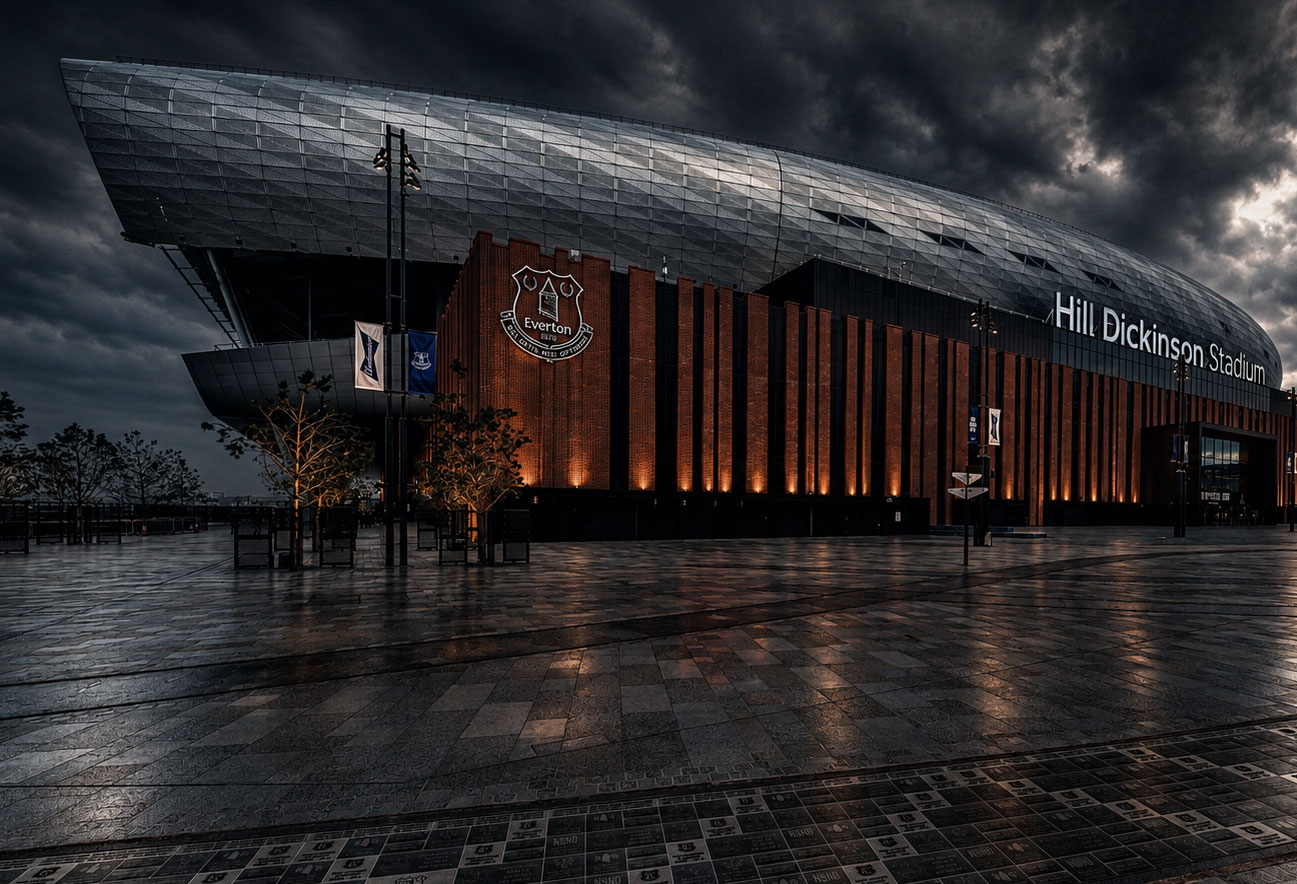
An outsider might view what has gone on at Everton since Saturday morning and muse that, “you couldn’t make it up”. The painful truth is that you don’t have to. Despite all the change that’s occurred over the past couple of years, change that was supposed to usher Everton away from the chaos of the Farhad Moshiri era, this football club continues to be one of the laughing stocks of the Premier League.
Once again, Sky’s unavoidable blowhard Kopite, Jamie Carragher, was on television screens this week explaining how Everton are the worst-run club in England’s top flight, and, depressingly, when it comes to the footballing side of the operation at least, you can’t argue with him. Because over much of the summer 2026 transfer window, and certainly in its final shambolic hours, the custodians of this famous, once-proud institution — or, at least, those they have hired to do their bidding from the Royal Liver Building and Finch Farm — have cast that notion in stone.
What should have been the climactic end to a two-year squad-building plan began, instead, with a galling mis-step over the potential sale of home-grown star, Harrison Armstrong and a somewhat embarrassing (but nonetheless welcome) climb-down by the owners, The Friedkin Group (TFG), that kept the teenager at Everton and ended with the ignominy of United States international Folarin Balogun leaving Finch Farm last night without having signed the contract that would have sealed a deadline-day move from Monaco.
The striker’s decision came after the transfer had been revived following questions Everton had over his medical tests, but a deal sheet was submitted to the Premier League in anticipation of the deal being completed before the 1am cut-off.
It means that when added to the Blues’ failure to land left-back cover for Vitalii Mykolenko, the sale of Beto to Fiorentina and Iliman Ndiaye’s £65m switch to Manchester City, Everton have just two senior full-backs on their books, just one developing but raw striker and have lost their best outfield player.
David Moyes, who has made no bones of the fact that he wanted more bodies through the door before the window closed, has seen his already small squad reduced from 22 outfield players to just 18 while TFG have seen their standing with — and faith among — supporters utterly and, perhaps, irretrievably undermined.
”What a Mess”
Everton have had farcical transfer windows in the past but surely none can rival what played out this summer; a slow-motion calamity that reached its climax in the early hours of this morning when news broke that Balogun had walked just an hour after it looked as though his switch from the French Riviera to Merseyside was all but complete.
The club’s hierarchy had allowed Beto’s move to go ahead without assurances that his replacement would sign and, now, assuming there isn’t a viable option with a pulse on the free-agent market, Moyes must now muddle through until January, at least, with just Thierno Barry as a recognised centre-forward.
Meanwhile, 21 months after TFG’s takeover from Moshiri and despite a full year of their much-vaunted new recruitment and trading setup in place, Everton went into the final hours of the window without a single specialist right-back after Nathan Patterson was sold to Torino for a nominal fee.
Ainsley Maitland-Niles, the 29-year-old midfielder-turned-right-back was acquired from Lyon just before the deadline but there is no back-up for either full-back position without the manager forcing more square pegs into round holes.
Such rank negligence is baffling from an ever-present Premier League club and one owned by a multi-billion dollar company that appears, in all other respects, to be competently and efficiently run. And, from a financial perspective, the Friedkins will feel very good about things — Everton raked in around £100m in transfer fees this summer with an outlay of £65m, plus the wages committed to Jack Grealish’s return on loan from Manchester City.
But Everton’s ability to compete this season, particularly for Europe, looks to have been hobbled. Any prospect of it is now hugely dependent on almost fanciful amounts of luck on the injury front, both in defence and where Barry is concerned, together with the relatively young forward delivering goals on a consistent basis.
How much the Blues’ attacking threat is blunted by the loss of Ndiaye will be determined by the extent to which Brennan Johnson can rediscover the form of his Tottenham and Nottingham Forest days, Tyrique George rapidly continuing his maturation on the wings, and Jack Grealish not only remaining fit himself but repeating the impact he had last season.
Frustratingly, things started out well enough. Everton’s “transfer committee” and head of trading, Nick Hammond especially, garnered praise for their patient and ultimately successful pursuits of George and Hayden Hackney, both secured on favourable terms from Chelsea and Middlesbrough respectively and in good time for both to enjoy a full pre-season. Christian Nørgaard, meanwhile, may eventually prove to be a shrewd acquisition for £7m from Arsenal once he regains his fitness.
However, the longer the window wore on and as deadline day in particular unfolded, it felt that, in all instances, money, the balancing of the books and Squad Cost Ratio considerations were prioritised over what ultimately happens on the pitch. Banking the £15m for Beto and ensuring he didn’t leave for free next summer, for example, was deemed more important than ensuring a replacement was found first.
Even if that wasn’t the case, the fact that the recruitment team left so much important business to the very last day invited the disaster that befell them yesterday.
It reduced their bargaining power regarding Ndiaye, the one player the ownership knew could command a hefty fee but arguably went to City for £10m to £15m less than his current market value. It forced them to go cap in hand to a player in Kenny Tete who used Everton to get a better contract at Fulham a year ago and who then proved to be unattainable again, prompting a move for a 29-year-old Maitland-Niles whose form in France has been on the wane for a while.
And when the Balogun deal was in jeopardy, it left them panic-calling Old Trafford and Villa Park to see if either Joshua Zirkzee or Tammy Abraham were interested in an 11th-hour switch to Merseyside. They weren’t. Humiliatingly, it prompted one prominent Tottenham Hotspur commentator on X to tweet: “For an established Premier League club to end up in this position is unfathomable. What a mess.”
This is, as so many fans — and even other outside observers — have said a “heads must roll” moment. Because it’s almost inconceivable that the current recruitment structure can remain in place or indeed that CEO Angus Kinnear can survive what has been a disastrous week for the leadership.
The chief executive was at pains in his recent interviews with fan media, and BBC Radio Merseyside to assure fans that a high-quality right back would be signed, that Everton would finish the transfer window stronger than they entered it, and that European qualification was the aim for this season. Again, that last claim seems fanciful now while he will, no doubt, wear the other two like tar and feathers for as long as he remains in his post.
As the architect and a chief component of the recruitment setup that he installed to replace the Director of Football model, it’s difficult to see how Kinnear survives this disastrous transfer window. At the very least, the structure surely needs to be ripped up and either re-thought or rebuilt with different personnel.
A False Friedkin Dawn
Dan Friedkin’s ownership of AS Roma has, until recently, been notable for his near absence as a public figure at the Italian club. He famously avoided attending matches, at Stadio Olympic or anywhere else, but made an exception for the Europa Conference League Final in Tirana in 2022 and was photographed with the trophy after the Giallorossi beat Feyenoord.
While it’s unfathomable to most that the owner of a company that has sunk hundreds of millions of dollars into one of the biggest and most famous clubs in the history of English football hasn’t seen fit to spend any time immersing himself in the culture of the asset he has purchased or even set foot in its magnificent new stadium on a match day, the Friedkins have maintained their distance since taking over at Everton as well. Neither Dan nor his son Ryan have attended a competitive game at Bramley-Moore Dock.
Perhaps that is also to maintain for the regulators at UEFA the perception of an at-arm’s-length separation between Everton and Roma., essentially to head off any conflict of interest should both clubs end up in the same European competition at any point in the near future — although, with the Italian club in the Champions League on the one hand and the recruitment and player trading setup his firm has put in place on Merseyside bungling it’s way through a panicked and slipshod transfer window on the other, that doesn’t feel like an imminent concern!
Whatever their reasoning, the Friedkins’ disconnect is what has led to decisions like the alarmingly short-sighted and misguided one made last week to try and sell Harrison Armstrong.
From a purely business perspective, selling a largely unproven 19 year-old for £35m to £40m, with a potentially large selling clause included, makes sense. But, as much as billionaire owners, particularly those from the United States (where club and team loyalty is a much rarer commodity than in England and players move far more freely and frequently between teams) would love it not to be the case, English football has an enormous emotional component.
Nowhere might that be more true than at Everton, where a local-born player has been in the senior squad in every season since the formation of the Football League in 1888 and the power of the fans has been demonstrated time and time again over the past few years. As has been expressed many times on forums, social media, and websites like this, it is not hyperbole to suggest that it was Evertonians who kept the Toffees in the Premier League just as much as the likes of Jordan Pickford, Richarlison, Abdoulaye Doucouré and those other players who made outsized contributions in those successful battles to stave off relegation.
TFG felt the full force of that fan power in the outcry that greeted news of Armstrong’s imminent sale and, thankfully, it forced a rethink that likely headed off the first demonstrations of supporter discontent. Yet, had it not been for a report from David Ornstein of The Athletic coming out before the Premier League match at Bournemouth last Saturday, the depth of supporter anger at the prospect of losing Everton’s brightest Academy prospect for many years might never have reached TFG’s notice and the 19-year-old starlet would surely now be a Forest player.
In the wake of the Armstrong debacle, some fans opined that the reaction from supporters might draw Dan Friedkin out from his self-imposed exile from Hill Dickinson Stadium. Now it’s hard to see how either he or his son could show their face at the stadium they have done so well to market since they assumed control of Everton in December 2024 without drawing a hail of derision. The same could easily be said for Kinnear.
The question then becomes, how do TFG make amends? Because as the Armstrong episode showed, without the fans on their side, they’re going to find it very difficult to succeed on the football front. It is the support and patronage of Evertonians that they will rely on to fill the stadium, buy the concessions, take up the hospitality offerings and roar the team they're now neglecting on to some semblance of success.
Then they could take a "budgets be damned" approach to bringing in the reinforcements we need at fullback and centre-forward in January, to either support what looks, from this vantage point, an unlikely push for Europe or ensure that the club stays in the Premier League.
Truthfully, they may not ever be able to mend the bridges; at the very least it’s going to be difficult and whether they even care to is another question altogether. They could start by issuing immediate partial refunds to every season ticket holder paying increased prices, well above the rate of inflation, to watch what is now an inferior, reduced product on the pitch this season.
They could offer sincere assurances that they, as a company, are invested in making Everton successful, that things can and will change, and that they didn’t, as it increasingly feels, merely buy a stadium with the inconvenience of a football team attached to it.
If they can’t muster the grace to break their silence and communicate not only their remorse for the failures to date, but also their ambitions for the future, they may as well sell up at the first opportunity and walk away. The alternative is years of rancour and discontent, the like of which weary Blues thought had been consigned to bitter history.
-
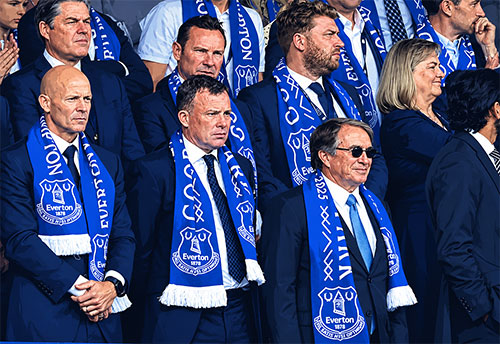
Same Old Story
Only Everton could turn a window with a supposed plan into a fresh installment of the same old farce of kicking the can down the road. We were supposed to be past this. -
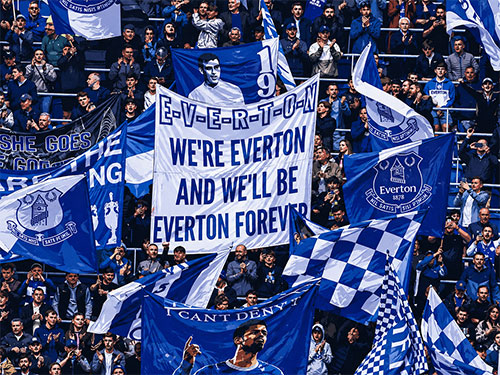
“I Want Everything Louder than Everything Else”
Who represents today's Everton? We have to find a catalyst. Somebody who will breathe life into the club from within. Somebody to reassure us that the club's heart is still beating -
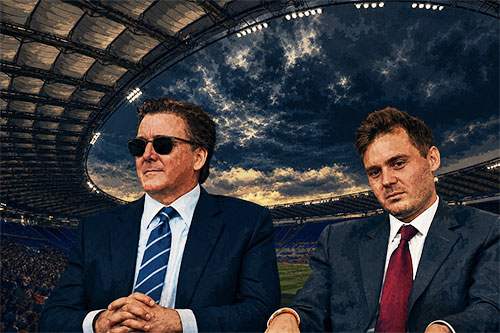
Roma – Lessons for Everton Fans?
This summer has been a setback for Everton. TFG tried to do things too cheaply and it’s hurt the squad. But Roma’s journey shows they do correct course.
Reader Responses
Selected thoughts from readers02/09/2026 06:33:10
It was certainly a terrible Transfer Deadline Day, and NOT what was needed.
I do wonder if it’s as much a watershed moment as the article suggests for the new hierarchy.
02/09/2026 06:47:56
Thank you, Lyndon, for eloquently penning a response to this disaster that captures the magnitude of the failure.
As you note at the end, the only way the club moves forward now is an honest admission of the incompetence that’s been on full display for all to see in recent weeks.
Heads must roll, but also there must remain hope among the fan base that there’s a silver lining in being forced to blow things up once again. Were we to have landed Balogun, the cracks would’ve been papered over. So while I’m devastated for the club, I’m also strangely aware that we face yet another new dawn.
And fortunately the bones are there for a real rebuilding project. If they make amends by bringing in a quality RB and striker in January, and assuming we’re not in a relegation scrap, then with new leadership at the manager and CEO level going into next season, we could still kick on.
Whether any of that happens, and whether it happens with TFG at the helm, remains anybody’s guess.
02/09/2026 06:50:04
There is a structural problem at Everton both with infrastructure and culturally.The Friedkins have not got a grip on either and their Chief Executive is inadequate. Moyes should have been gone in June after the end of season collapse.
Like Roma I thought that they would be forced into a Crisis Management situation, but I never expected such dysfunction.
They have a Crisis now to deal with.
02/09/2026 07:01:15
These are hard nosed American businessmen who, if it was part of their Toyota empire, would have no compunction in swinging the axe.
But this is ‘soccer’ and a world away from what they know or understand.
As a season ticket holder what can I do to show my displeasure?
I don’t buy any merchandise or food and drink at the stadium and they already have my money for my seat indeed, I will be spending 10 pound on a ticket for the Wolves cup game today.
So they can stay in their ivory Texan tower and allow it to wash over them.
Having said that, Kinnear must bear the brunt and should be sacked forthwith.
I posted a couple of weeks ago that I thought we would finish 10th at best, 13th at worst.
Let me amend that, 14th at best, 18th at worst.
Was it SCR that has driven all this?
If so, how will the likes of Hull get on having signed 18 players. Yes, 18!
Even darker times ahead I fear.
02/09/2026 07:05:07
We had our pants pulled down, with the derisory fee for Ndiaye and nothing to show for it.
These owners are nothing but a bunch of Charlatans and Shysters, that probably don’t even know the offside Rule.
Their continued absence, and lack of Clarity, shows that they have nothing but Contempt for our Club.
Carragher was right, it’s just that it hurts when we here it from a Koppite.
I honestly can’t understand, how the, Hierarchy,Coaching Staff and Manager alike are going to to explain this debacle away.
Maybe they will tell us to make believe, in true Disney style and Pretend, that both Ndiaye and Beto are injured for the rest of the Season!
02/09/2026 07:33:04
I hate Everton. Lots. But I’m stuck like the guests in that American novel who can’t escape from their hotel. Its revolving exit door constantly returns them to the same moronic place with the same cliched characters. There’s no way out.
What a farce yesterday and the days leading to it have been. Broken promises again and again. The targeted fullback turns out to be a minor French player who we had all forgotten even existed. Oh, and I heard he doesn’t really like playing right back and his pitch covering stats are half of what is expected for an average premier league player.
We then lose one of the ‘Bill and Ben’ duo only to find that not even ‘Spotty Dog’ or ‘Andy Pandy’ wants to join us as a replacement.
To cap it all, an aging party-loving ex England player returns, but we then sell our most skilful player with three years left on his contract at a bargain price. Is Angus Kinnear related to the late English comic actor, Roy?
Our revolving hotel door returns us to a perennial Everton misery. We just can’t get out of here. What did we do to deserve this?
I hate Everton. Lots.
02/09/2026 07:58:46
It is a mess.
The general mood last night was that if we get Balogun then, despite the sale of Ndiaye, it's been a positive window.
There are still some positives from the window but we've been left light on depth and quality again.
Barry is now the only senior striker in the entire squad. That is the balls up.
Pretty much everyone in the Premier League was in the same boat as our recruitment team last night, with (I think) an unusual volume of big deals and deals generally being done on the final day.
I think we are the only one's who failed to land the big target - or at least the Plan B.
Here's a few other sobering facts:
- Transfermarkt rates us now as having the 17th most valuable squad in the division (that is a fall of 2 places on last year and a reduction of circa €60m).
- Only the three promoted clubs are behind us and Ipswich (18th) are closer to us in value, than we are to Notts Forest in 13th.
- We now have the smallest squad in the Premier League (21 senior players). The next smallest are Leeds and Forest, each with 24 players.
- For the second year running, we had the 14th highest spend in the division - and net spend shows us as investing the 16th least in our squad in the division.
If we had got Balogun for the reported €45m it changes the complexion on things a lot. It makes TFG look frugal but astute - improving the squad at the same time as trimming out the deadwood and balancing the books.
However, without Balogun it looks very poor.
Are we amongst the best placed for Europe and the Cups now? Probably not, no.
Possibly a bigger concern, is the club set up to be an attractive home for a quality new manager come June next year? I expect the likes of Kieran McKenna have been watching from afar and being pleased they are not part of it.
Moyes must be feeling very pissed off - left in this shit state in what should have been a swansong season where he tries to get us back in Europe or sign off with a Cup victory.
I know a lot of people on here dislike (or despise) David Moyes and cannot wait for him to leave the club. However, we are now a managerial departure away from becoming a serious crisis club.
TFG now have a lot to answer for and personally, I'd sooner see Kinnear go (or whoever is really responsible) than Moyes.
02/09/2026 08:00:16
Not to mention the saga with Richarlison too.
02/09/2026 08:03:38
Robert, how far are we from Moyes walking/being sacked and Dyche coming back in? Frightening thought but a potential reality. Back to square one perhaps.
02/09/2026 08:14:28
What a terrible week this has been for our once great football Club. I posted the other day that we used to get frustrated with David Moyes during his first spell as manager when he would seemingly spend ages performing due diligence on incoming transfers, well that's clearly all changed. This weeks performance by those in charge has been shambolic, and embarrassing.
So we now have a new right back, but is he any better than Patterson ? We have under sold our most entertaining player, brought back Jack Grealish apparently paying all his inflated wages, and said good bye to Beto leaving just the fragile Barry to lead the front line. What's the betting that on Sunday a weary Barry gives way to Michael Keane on 65 minutes ? It can only be described as a mess, and it's one of our own making.
02/09/2026 08:15:10
Moyes will only go if sacked - otherwise he forgoes his salary. He's not a mug.
However, he is going to be in full "downplay expectations" mode after this.
He really has been very badly let down indeed.
Moyes is now the guy keeping us afloat in spite of what the club has done to the squad.
02/09/2026 08:24:12
Would love to know what Balogun was actually thinking when he changed his mind...but then again it would probably be enough to sink the whole ship...he must be royally annoyed to have pulled out last minute...what did he see about Everton that did it...besides the 12 hour wait for nothing and where Moyes probably never said hello and the money men flirted with 15 different players behind his back.
02/09/2026 08:42:40
Stock take looks really bad, really bad.
One make do RB
One LB
One striker
Two ageing CB
One expensive loan player
One very dour manager
Not a good prognosis, tough it out til christmas and pay over the odds to survive.
The match day squad picks will be a hard choice when you are so thin, fans will be disgruntled, I am already.
02/09/2026 08:51:43
Here's some more sobering statistics:
- in the past 5 years we have had only one season where we spent more than we made
- over the past 5 years we have invested the 2nd least in our squad (i.e. lowest net spend) of all current Premier League clubs.
- Ipswich have invested €350m more than us in their squad over the past 5 years.
- Hull have invested €150m more than us in their squad over the past 5 years.
- Coventry have invested €180m more than us in their squad over the past 5 years.
- the only other club investing (net) less than us is Brighton. However, they operate a high volume player trading arrangement alongside the first team squad and it doesn't hurt them. They have a 29 man senior squad rated at circa €200m ahead of us.
- our most expensive signing this summer is Brennan Johnson at €25.80. That is lower cost than the top signing at Brighton, Brentford, Sunderland, Ipswich, Leeds, Fulham and Coventry.
- Hull, now, incredibly have a First XI that is really not that far behind us. In Tzolakis, Herrington, Mendy, Norton-Cuffy, Mouzoutakis, Belloumi, Vaz and Ansah they have some very good players (and a much bigger squad)
- financially, that summer window has just played out in the same way as it might have done if we'd been relegated.
This has got to stop. Next summer, TFG have got to behave as though we are a proper Premier League club and spend accordingly. It is unsustainable to invest so little in the playing squad and remain in the division.
02/09/2026 08:53:50
Robert (11) I agree, we need Moyes more than ever.
Benjamin (12) I imagine Balogun asked himself ‘do I really want to join this gang of charlatans?’ To have strangers questioning your fitness while at the same time seeking 11th hour loan deals for players not previously mentioned is simply humiliating.
The reputational damage of this debacle and the Harrison Armstrong scandal is huge. Kinnear’s position is untenable. As for the transfer committee structure, it has proven shambolic. Kevin Thelwell must be laughing at the level of incompetence displayed by the several people who succeeded him.
02/09/2026 08:59:08
Robert (14) Sobering?! Those figures are enough to justify a long, strong drink.
02/09/2026 09:04:16
It's not complicated.
If you really want to affect change, DON'T GO TO THE GAMES. No management will survive for very long without customers. The real power is always with the people, if you don't listen to the people who tell you they are in control. You get what accept.
02/09/2026 09:08:56
We truly are a rinky dink club run by children in suits. How could we have allowed this to drag on as long as it has and be left with our arse in the air? Complete incompetence and a dereliction of duty. Moyes should resign in protest, but why should he take a financial hit to make a point? I agree with the comments above, from now it will be constant playing down expectations, a ready made excuse for more mediocrity, followed by sound bites regarding it being an "incredibly difficult market " in the January window.
Sigh.
02/09/2026 09:11:40
Take a look at our right-back
He's the only one we got
Not much for a right-back
We never seem to get a lot
Take a small jet across the water
Bringing in an American
Not been treated like he oughta
He's hoping it's going to fall through
'Cos this recruitment team is just poo, hey
02/09/2026 09:14:39
One dodgy ankle. That’s all it took to go from a passable transfer window to becoming a farce.
I’ve learnt in life to try and take positives and move forward, the only two I can wrestle out of the wreckage at present are that Moyes likes a back against a wall, he’ll feel emboldened now that the fans (generally) will back him vs the Friedkins, Kinnear, and the likes of Brennan Johnson, George, Dibling will be given extra polish for their shooting boots and hopefully relish it.
But yeah, what a way to ruin your reputation in a matter of a few hours. Tammy Abraham laughing at us and putting down the phone summed it up.
02/09/2026 09:18:37
I wrote the following, replying to an article on Evertonia.com on May 28th 2026:
... We will probably sign some players who are over the hill. We won't get them in early but procrastinate. The forwards will follow in the traditions of Sandro, Keane, Tosun, Niasse, Rondon, Maupay, Barry. The experienced signings will get crocked and be out until Christmas.
Our scouts won't look for unknown gems but will get out their Panini Premier League sticker albums from 2025/26 and tick any player that we might be able to afford. As a result, during the summer, it's very likely we'll have one forward player in mind who will opt to go elsewhere (think Giroud or Delap) and we won't have a plan B.
We'll probably play a few pre-season friendlies (probably Preston North End) and get turned over in most of them. We'll get excited by the few players we manage to get in and will use phrases in August like "bring on the derby" or "Europe". Michael Keane will still be a first choice centre half even though he should have gone about 6 seasons ago. Come October, it'll dawn on us that we've overpaid on our signings and we are not that good. The positive phrases will have turned to "we'll be relegated". We'll console ourselves that there is the January window when we can bring in reinforcements. We'll be linked with all and sundry throughout January. On Deadline Day, we'll follow Sky Sports News all day and realise that we will have to finish the season with what we've got. Possibly after making a half-hearted last ditch attempt at 23:55 to lure someone who instead opted for Palace or Sunderland because they are in Europe. In amongst this, there will be the home and away kit unveilings and most fans will think they are awful. We'll also have debates about white socks vs blue socks for the home kit.
Meanwhile, the likes of Brentford and Bournemouth will sign players you've never heard of and be above us in the league.
Prove me wrong, Everton.
Nil satisfaction. Nil optimism.
---
The only crumb of comfort today is that this club is best when its back is against the wall and the fans get angry. Think 2-0 down v Wimbledon, Joe Royle's first game in charge, Big Dunc being sent to Barlinnie, the Allan sending off against Newcastle, the coach welcomes, the points deductions, two goals down v Palace, the Bournemouth home game, the phantom headlocker...
02/09/2026 09:35:23
I'm anxiously awaiting the signing of out of contract players to provide cover for centre forward, right back & left back. I'm sure the Club have got some real gems lined up.
This season could well prove to be Moyes' greatest managerial challenge. I hope he's still up for it, as I wouldn't blame him if he was no longer arsed.
02/09/2026 09:35:55
Robert #14
In addition a £4 million council loan in infrastructure outside the stadium project and Everton don't own their training group The top 6 own their own training ground and have spent millions more on infrastructure.
Everton are trying to be three different clubs at once.
1.Everton a "buy low, sell high" development club? (Their recruitment says yes).
2. Everton a "win now, pragmatic" Moyes team? (Their manager says yes).
3. Everton a "possession-based" side? (Their midfielders suggest yes, but their defence suggests no).
Until TFG decides exactly what Everton's footballing philosophy is and hires a manager, a recruitment team and a Chief Executive who can knock heads together so that all are 100% aligned with that philosophy, this "pulling in different directions" will continue.With the result we have just witnessed.
02/09/2026 09:37:53
I am clutching for positives and hoping that this situation leads to players getting opportunities in the first team they otherwise would not have done, stepping up to the plate and showing their full potential.
Think our four points from first two games are huge. Because after game five, there is a three-week international break and I don't want to enter that in the bottom eight.
Similarly, I don't want an early cup exit. Be bad for supporters' morale. So it is important that we beat Wolves.
Us supporters can of course continue to make a crucial difference. When the games start, need to show our intrinsic love of Everton and get behind the players we do have. It's us against the world again.
02/09/2026 09:39:27
Despicable last few days of this transfer window and the likes of nunerous dimilar disasters over 3 decades cones to.minf.
This is the most danaging and is almost sabatage by Angus and his incompetents.
Stinks the Hill Dickinson out and is unforgiveable.
How had this been left to happen and looks like Keane is gonna be a draftin striker, Graham who knows.
Turns the scope for a good season into a very, very tough season.
God only knows the chatter amongst the threadbare squad at Finch Farm today.
But the club has let Evertonians down big style.
Back to square pegs in round holes to fill in.
Ground Hog Day!
02/09/2026 09:47:15
I have no words.
02/09/2026 09:52:30
Same old Everton. Balance sheet looks better, no investment, the fans will carry on paying £6.50 for a donut.
And we thought Moshiri was bad.
02/09/2026 10:19:05
Nick#27
The Friedkins are nothing like Moshira. The Culture blatantly worked against, because he was a football Muppet,and it was obvious he had dodgy connection.Though gratefully he had proper Management in the property end.
IMO more of a fight is going on and we are seeing the glaring divisions.The Friedkin will have to do what they are capable off to address this.They now know the ball game they are in,and will have necessarily do what is required.
Mike#24..
I am thinking the same.
'hoping that this situation leads to players getting opportunities in the first team they otherwise would not have done, stepping up to the plate and showing their full potential.'
02/09/2026 10:24:31
Evertonians probably saved the day by ending the Armstrong transfer. It could have been worse.
02/09/2026 10:49:34
It appears those who doubted TFG were correct.
Market stall haggling over transfer fees results in the smallest squad in the Prem.
Im not having all the blame falling on Kinnear,he answers and is employed by TFG.Imo the buck stops with TFG.
I absolutely knew they would not spend the full amount allowed under the ruling.
I did not expect them to make a profit on sales/buys.
02/09/2026 11:32:30
If you look at TFGs record at Roma then we should not expect much better for the next couple of years. They want a lean business structure and they are getting there very quickly.
They will not be likely to suddenly invest in the squad but will sell one or two players at peak value each summer and make a small profit.
Moyes needs to be persuaded to buy younger players with resale potential rather than older experienced EPL players or we will be in real trouble.
The only upside is that Moyes suits a small squad with backs against the wall in a season of struggle. Expect a contract extension in the near future!!!
02/09/2026 12:39:06
We seem to have swapped the ineptitude of the Moshiri era - which led to us skirting with relegation and being on the receiving end of chunky points deductions - for the cold, money-first oriented Friedkin-era.
The one thing you would have expected to improve would be our processes, especially in relation to transfers. We might not like their emotionless approach to our wonderful club but you’d anticipate some sort of positive pay-off. Last night’s debacle was as bad, if not worse, than any previous transfer deadline day.
Like him or loathe him, if I was Moyes I’d be treading water until my contract finishes and then clearing off. Never mind knife to a gunfight, our owners are making him stand on one leg and wear a blindfold.
02/09/2026 12:42:37
Perhaps we should give the owners another reminder of fan power this Sunday?
If we all delayed taking our seats until 2.05pm the world would get to see our fantastic new stadium virtually empty before we all then arrived en masse.
No chanting or banners required. Just a 50,000 person show of force.
02/09/2026 12:47:22
Well done John Pickles @ 19
very witty indeed.
02/09/2026 12:53:25
It's rare I use profanities, but they really fucked this up. What was alluded too as a significant summer phase two rebuild by Kinnear in his slick, well prepared Q&A a month ago lays in tatters. Words of the latest con man to sit in the CEOs chair.
They weren't genuine, it's rare, extremely rare, for a player not to agree to personal terms once the teams have agreed a fee. Yet this week we saw Richarlison, turning down a move to his "beloved" team as he could not agree personal terms. Rumor had it we only offered him half his current wages. On top of that Spurs allegedly refused to pay him his bonuses. A double hit. We could have made the deal, but we didn't.
Follow that up with Balogun, fees agreed, medical issue, renegotiate (really? Sound convenient, trust issue?) Players walks away unable to agree terms.
Twice. Once is unfortunate, twice is a bad strategy.
Add to that the incompetence factor. We waited till the last week to do our shopping, Strategic once again?
The word had got out, players are not interested in us, our low ball wages and the way we are conducting business. That's bad. Really bad.
Then to top it all, the totally fucked up sales strategy. Clearly Kinnear had been told to get rid of players, a manager of Moyes experience would only sanction that if others came in. We sold before completing purchases. Either under distinct TFG orders or sheer bloody incompetence.
We are left in a far worse position than if we had done nothing. Key areas weaked to a dangerous point. There is no way Moyes would have sanctioned any of this, I doubt he wants to continue.
As much as the business accumin has been infrovide, the playing side has not.
As usual with Everton we are left with pieces of the puzzle but no idea what the owners had in mind. But their investment is in risk now thanks to the incompetence of their strategy and management.
Lyndon you have summed it up brilliantly. No matter how successful a person is does not guarantee an owner who understands football.
Clearly the TFG don't have a clue.
02/09/2026 13:33:44
There I was on 'different' Everton social website this morning reading how hell had frozen over and the world was about to end when I thought I'd go onto my trusted, sensible, down to earth Evertonia. Alas, it was not to be. Even Evertonia had armageddon writ large.
Let's take stock here. Before TFG came in we were staring down the throat of administration. We are still being penalised (Burnley £35m) for being £19m over budget so the PL can stave off the regulator by trying to look tough on financial mismanagement.
Now let's look at the main business done:
Merlin Rohl, £18m, already showing signs of an excellent acquisition. Worth well above £18.
Tyrigue George, £16+m, ditto.
Hayden Hackney, £18+m, championship player of the year. Early days, but looks very capable.
Christian Norgaard, £7m, tons of experience and a decent squad player.
Brennan Johnson, kinda free with proven PL experience. Why wouldn't ya?
Ainsley Maitland-Niles, £4m, plenty of experience for a budget price and gives the club some breathing space to look again in January.
Jack Grealish, free, wages only then a free agent. A fans favourite and lifts the team technically and morally. Again, why wouldn't you?
People tend to forget those first two as they were here last season but still need paying for.
Outs:
Iliman Ndiaye, £60+m, a player I often saw at Sheffield United and destined for better things. Bought for £15m and made us a huge profit. I don't blame him for wanting CL football he's ambitious, and wouldn't sign a new contract anyway.
The failed acquisitions:
Folarin Balagun, £40m (WTF), from reports I've read we've dodged a bullet there.
Tete, £9m, the fan's hated this from the start so good to have failed. Not good enough anyway.
If you can't get who you want don't blow cash on someone for the sake of it.
Sales:
Beto, £17m, never a week went by without a tirade of abuse cos he's not PL standard.
Tim Iroegbunam, £15m, a very good return on someone who would probably be superfluous.
Patterson, £3m, good luck to him as he was never going to make it in the EPL.
So why so much angst from supporters? There seems to be some idea that we have money like Chelsea or a pull of Arsenal, Man City or any CL team - let's be honest, we don't and haven't for a number of years.
In summary I think we've done pretty well bringing in who we have and releasing those we don't want. Of course it could have been better, the squad is too small, but we are where we are. We are on a budget, get used to it. I don't disagree with many of the comments we just need to stand back and assess how future recruitment should look. I think TFG learnt a valuable lesson over Armstrong. Let's hope they remember fir the future.
As for the academy, if we only expect to get a gem every 30 years (Rooney & Armstrong) then you might as well scrap it and save the money. Otherwise blood the youngsters like Graham. Oh, and one last thing start looking for a new manager now, this one isn't Everton of the future.
I'll stand back now and take the flack for speaking some home truths.
02/09/2026 13:36:19
I fundamentally disagree with this, Lyndon. This is not incompetence, this is not more of the same. This is the Friedkins showing us who they are. We should believe them.
We need these vulture capitalists out. We need to realise who has bought us, and start getting our heads around the fact that we need to figure out a way to get them out. It's doable. Painful but doable. It may involve relegation, mass boycotts, public protests, I'm up for all of that rather than going along with these scumbags.
02/09/2026 13:44:35
The massive infuriation with this is that the recruitment team started the summer strongly and we looked on the up.
They managed to get Rohl, George, Hackney, Johnson and Norgaard - all of whom look like good signings and the latter four were acquired for a fair bit less than expected. Good squad building and good financial sense.
We were then so close to getting Johnston for RB and, had he not got injured, we'd have entered the latter weeks of the season just needing to sort out Ndiaye's likely departure, the likely loan return of Grealish and a better quality replacement for Beto.
For whatever reason, it looks like most clubs were both balancing books and acquiring players right up to the deadline yesterday - so that is not excuse.
Even as recently as yesterday morning, there was a good possibility of ending the day with something like the 10th best squad - and a sense of optimism that we'd really gained ground on Newcastle and Villa (both undertaking a massive rebuild).
However, the way it has ended means that (along with Villa and Newcastle) Brentford, Brighton, Forest, Palace, Fulham and Bournemouth all have better squads than ours.
We have been left closer to Leeds and Sunderland, as clubs just a touch ahead of the three promoted clubs - and (with the smallest squad in the division) extremely vulnerable to injuries and suspensions.
And the trouble is that, again, even yesterday morning you could see a really good squad emerging.
I think they got overconfident in their ability to strike financial deals and lost sight of the fact that we needed players, and the skinflint approach can only work to a point in an overheated market.
02/09/2026 13:50:49
A very astute article; thank you Lyndon.
Many excellent comments on this thread with admirable restraint shown given the circumstances.
If we could not give a player who is 100% devoted to us a decent screw then shame on us.
Suddenly the ' best stadium in the Championship' jibe looks prescient.
A low maintenance lower league club with a Stadium making a mint from 'events' is an eye watering prospect for Billionaire Dan.On
Fools us for not spotting an elaborate scam.
02/09/2026 14:11:18
Mark@39 - I agree with much of what you say in relation to the incomings and outgoings and if we had got Balogun over the line I would have been fine with it. However, it is total incompetence to sanction the sale of one of your two strikers (our leading goalscorer last season, if I recall correctly) without securing a replacement. Look at what Fulham did with Tete - no incoming replacement, no sale. Heads should certainly roll for this (but not holding my breath).
02/09/2026 14:32:30
Some valid points, Mark. However, we are still now proceeding with one centre forward, one left back & one right back of sorts. Not to mention the proposed sale of Armstrong.
They rather messed up what had looked like being a very promising transfer window.
Moyes must be livid.
02/09/2026 14:35:12
And yet, just to confuse things further about just wtf is going on behind the scenes, yesterday we put a £34 million bid in for Jamie Leweling, even after the £40 million was agreed for Balogun and Grealish was getting confirmed. So they were prepared to splash cash, but not on quality full backs. I suspect their analytics worked out they could flip him for profit in a couple of years.
02/09/2026 14:48:22
Mark 39, love your glass half full, BUT
the early business was agreeably good, but the last minute mess was an utter fiasco,, the general universal reaction is the same, media, pundits, fans from other clubs, all on the same page, Everton were shocking.
So although we do share our angst on fan forums, and sometimes get carried away, the club deserve some of the vitriol coming their way over this.
02/09/2026 15:10:12
Sign Vardy immediately. Not a joke. Everything else is arguable (but imo opinion gross incompetence), but we can not have only one striker in the sqaud. Oh but we have so many wonderful options for playing players out of position there too.
But speaking of jokes, you know the club is a massive one when someone like Grealish is dying to sign. He sees it as a laugh. No expectations or ambition like at City, no return to home pressure like he would have at Villa (who were never interested anyway). Just kick your feet up at Everton where Moyes will tell you every day what a good boy you are.
And sadly, though Moyes is mostly not culpable for the transfer bunglings, despite his limitations he now stands between the club and free fall into the abyss. Dire times.
02/09/2026 15:22:45
Kevin # 40, I completely disagree - this is incompetence. TFG did try to spend the money they brought in from the Ndiaye deal and failed. That was not deliberate asset stripping with no re-investment. It was over-confidence on the Balogun deal, an insulting wage package for Richarlison and some embarrassing failed scrabbling around last minute.
Taking a step back, they have been very miserly again this summer (with or without the Balogun deal). But they have also made the (sensible) point that they are trying to do this in a way which doesn't bite the club on the arse later down the line. Again, sensibly, they are trying to avoid the wholesale rebuilds that Newcastle and Villa are currently going through (and alas seem to have managed quite well). That is not a bad strategy as such - but the problem is in the execution.
The recruitment folk at TFG have failed from a position where they should have been well placed.
I think Dupont (on this thread or another) made the fair point that Thelwell performed much better under much, much more financial strain.
To me, it is incompetence.
02/09/2026 15:39:36
Robert
they're so good they are projecting forward into the future where we qualify for the champions league, and then have to sell one or two of our best players, and thinking 'eesh, how do we avoid THAT!'
wow, now that's what I call organised. Or, they could just be bullshitting, saying any old crap to justify the fact they've not spent any money (again).
You re perfectly entitled to believe that they honestly have great ambitions for Everton, but have been hamstrung by their own naivety. I hold to a different course, I see them as ruthless businessmen who bought us for a song, and have us dangling on a shoestring. We only need to look at how their employees behave with them 'they're winners!' to see the whole set up is full of BS.;
02/09/2026 16:35:05
I will simply say I thought that we would never have an owner that was as incompetent and arrogant as Kenwright but TFG have exceeded all expectations.
I know we all feel bitter and disappointed but I think it is important to rally around the players and Moyes for the foreseeable future until we can get the changes this club needs in management, ownership and direction.
02/09/2026 17:33:46
Vardi, DePay, Martial...desperate times. Id take Vardy...
Theres no spare tyres for the car, we will use remoulds.
Moyses, perhaps saw this emerging over Summer?
Who knows?
No excuses for not securing at least x1 striker and LB. Shame on Kinnear, but he it seems is the TFG stooge.
Is their any analysis on Roma's transfer window?
02/09/2026 18:07:39
I blame Monaco and Balogun.
Monaco had to sell to balance their books and it's appearing to me, they were more pushing Balogun out the door, than he was looking for a move Merseyside.
Late flight across the water for the physical, then he fails it. That's our club's fault why, exactly? Then Balogun didn't like the way the whole thing was being handled, so backed out?
My belief is that he neither wanted to come to Everton, nor leave Monaco, but went through the motions instead of flat refusing his club pushing him out the door.
And we're left holding a near-empty bag of Barry as our main strike force. Our hierarchy does have to answer.
But that we only have Barry in this specific case, I'm pointing my finger much more at the French club and their player.
And he is injured, by the way, so why did he agree to anything at all? It's not as if the Monaco fan-base wanted Balogun. They'd just voted him their Player of the Season.
02/09/2026 18:50:04
Shocking that TFG ended the transfer window with a £25 million profit when you consider we have ended the window with the smallest, unbalanced squad in the Prem.
02/09/2026 19:17:51
Agreed, James, and Balogun did sign the deal sheet after Everton and Monaco agreed revised terms before flouncing out, probably because the new terms pushed his bonuses into long grass, (although he missed his early flight to Liverpool so there was less time to react to the failed medical) so he can do one, but, but, but - this shouldn’t have been a last minute deal. Should’ve been last week. And yes, hindsight is great.
02/09/2026 20:38:10
On a different note, whither Jake O’Brien? Presumably there were no offers. At present, rightly or wrongly, he is fourth in the pecking order behind two 33 year olds and an injury prone Branthwaite. Villa signed Taylor Harwood-Bellis for £30m. What would we have accepted for O’Brien? What will we accept in January or next summer?
02/09/2026 22:34:27
Special shout out to Jimmy Garner turning down a £65 million offer to go to Chelsea. Despite the maelstrom of the last 24 hours, I reckon the turmoil will galvanise a small squad, led by a guy who absolutely relishes these circumstances.
02/09/2026 22:55:33
There's so much shit above, I don't know where to start. Jay "rally around the team" are you employed by TFG ?
James, don't blame Monica, this was the plan from the start. I will eat my words if someone gets sacked over this mess but I doubt it. Thing is lads and lassies, profit is not a bad thing and without it there is no point in being in business. So embrace it, it will make you proud some day. See what I did there, work out the quote yourself. The power of Jameson is rushing through my vains. Oh and Christine, love your wisdon.
02/09/2026 23:11:51
Oh, I forgot to mention the sale of Harrison, funny it was released just in time for the fans to react the way they they did. Not think that was suspicious? Oh what webs we weave.
03/09/2026 02:06:36
I agree with a lot of what's in the main piece except for that we'd lost our best outfield player. I love(d) Ndiaye but KDH is (was) our best outfield player.
03/09/2026 03:19:22
Friedkin is a shit, now clearly using us fans to generate even more money into his coffers than even Moshiri and Kenwright attempted.
Obtaining £25mill profit into his personal fortune in the now-closed window, whilst demonstrably weakening OUR squad, as will soon become apparent in terms of results as we yet again endure a fight against relegation, is called total self gratification whilst being always reluctant to try for a real fuck in the real world.
Another word for it is "Shit" of course, and us savvy Toffee fans know all about them don't we, after decades of Carter/Johnson/Kenwright-(Green)/Moshiri fake leadership?
03/09/2026 05:07:03
Mark #39, you should chat with my wife. Not sure if you have bugged our holiday apartment here at Port Douglas but she has just given me a similar assessment, virtually word for word!
03/09/2026 06:53:12
The club have said they're not looking at free agents
03/09/2026 07:01:04
Don, how do you know that money is being taken out of the club and into Friedkin's personal bank account?
Seems like people are adding two and two and coming up with five.
The club has hundreds of millions of pounds of debt. Perhaps, rather than spending that 20/30m on the squad, the owners decided to beef up the club's cash reserves.
A poor transfer window in terms of bulking up the squad doesn't automatically mean asset stripping.
Same thing with the refusing to buy tickets for games or food at the ground. Let's weaken revenue streams and help drag the club eve further back into chaos. Things may be bad enough with a small squad without adding to it.
Protest outside the ground by all.means. Get onto the national.media certainly, we have their focus after Monday. But don't go out of our way to weaken the club. There's enough people out the thst would be happy to do so without the fans adding to it.
03/09/2026 09:24:19
39 Mark Stanley
I can see where you are coming from Mark - but at this moment in time after just 2 games of the season Everton have 18 senior outfield players - 1 right back, 1 left back and 1 striker. Once injuries, suspensions and fatigue kicks in - which it all inevitably will - then I fail to see anything other than a back to the walls struggle.
The CEO spoke of Europe as a target - do you really think this squad is capable of that?
Even with 2 games in Moyes was having to reluctantly play the likes of Garner - freshly back from an injury - before he wanted to - and this was before the transfer window ended.
03/09/2026 10:01:14
Everton never fail to deliver - angst, embarrassment and general annoyance!, so trying to stay on top of that I have some random thoughts.
Kinnear is an employee and does what his Board tell him to do. He has been challenged by TFG to achieve "X". TFG have not told us what "X" is an likely never will.
Moyes is an employee who reports into Kinnear. He is going to fight his corner up to the point just before he gets sacked and will instead likely make himself, and all around him, as miserable as possible so he has to be sacked, with full payoff. He may also thrive under the injustice and perhaps the team will surprise. Either way he will be unbearably dour and negative
Paul the Esk's latest review of the window is amongst the best independent view (as TFG don't disclose) and it paints a picture of astute business practice to ensure that the club never fails in its governance again. If any of us were impacted/implicated by the likes of a £40M "goodwill" payment to Burnley we would probably do the same.
ONE
Villa and Newcastle spent heavily to get higher up the table and having achieved cup success soon realise that the top 6 are "having none of that thank you" and are now disposing to recover funds before they too are hit by SCR restrictions. Maybe TFG are getting the underlying business totally stabilised, within the restrictions, and with headroom to grow when the time is right. That would give Everton an advantage as a "new entrant" into the challenger group, coming from a position of financial strength.
TWO
OR, maybe they are happy to have a slow/non growth football business alongside a fast growth entertainment and events venue. We will likely never know.
The attempted sale of Armstrong fits into both.
It seems they were prepared to spend on Balogun and others, so i'm not so sure it was for a lack of spend, the window issues were more from a lack of good timing, market expertise and as someone else said, overconfidence in deal making while under prepared in Squad understanding.
The squad is thin in key positions but manageable if some players are prepared to slot in when needed. If it wasn't for the lack of depth in the 3 positions ST,LB,RB, would we really be upset that Beto, McNeil, Tim, Gana, Coleman, Patterson are gone, and replaced by the new guys? younger, faster, stronger, cheaper and with better growth potential.
So, I for one (as Uncle Bryn would say) am prepared to move on, support the players, squad and manager we have and hope that some of the younger players get more game time and may surprise us. I will not buy a £6.50 doughnut but I will still give my money to the business.
03/09/2026 10:15:32
Angus is the culprit.
Does anyone believe Angus is automonous in these decisions?
03/09/2026 12:27:55
Just been reading on an Everton Facebook site, the Taxi Club Blues, that the Friedkins are apparently looking for extra investment in the club.Think Baz also may have mentioned it on Toffee TV.Anyone else heard anything about this? And what could it potentially mean for us? Sadly, I’m a very long way from being any kind of football finance expert!! Paying for a couple of pints with my debit card is a struggle for me!! 😊
03/09/2026 12:53:45
David - it could be them genuinely wanting fresh capital to accelerate stadium/squad investment (especially after the last few days shitstorm), or they’re diversifying risk because they’re juggling too many sporting concerns, or they want to scale down their commitment to us after all the fan/press grief they’re copping. Depends on how big a stake it is - if it’s a small minority stake, that’s normal corporate practice, if it’s a majority stake, then they’re looking to get out. I strongly suspect it’s the former. Worth keeping an eye on, though.
03/09/2026 13:43:15
That was a blooper of a window that’s for sure, I’m not sure what to make of it yet, I think best course would be to sit tight and let the smoke clear and dust settle.
Barry to take the bull by the horns?
.
03/09/2026 13:55:33
It's perhaps twenty games between now and January's transfer window, if you include a league cup run. I think we can manage until then.
I think the squad is still fresh enough, and there are a couple of international breaks.
David @68, I find three or four pints if best bitter, and a cheese and onion cob, is well worth the effort with the debit card. Might even cheer you up some. Depending on how you see the window.
03/09/2026 14:30:24
I think people are overreacting a bit.
This all comes down to Balogun for me.
We sold Ndiaye to fund the Balogun move. That's a tough but solid decision.
Additionally, we carved dead weight and trimmed the squad. Again, I see nothing wrong with that.
When Balogun failed his medical, Everton supposedly wanted to renegotiate. That, again, is completely understandable.
Then negotiations fell through. Therein is the tragedy.
If we get Balogun, the window is just fine. With that stinking medical, it all went to hell. The idea was solid. Everton being Everton, somehow it all went to shit. But it's not management's fault. The medical for Balogun went south, and the solid decision to get major money for Ndiaye and use it to bring in a kid that is very good and can put the ball in the net, something we seriously lack in presently, made everything go crap.
The idea and concept was fine. Bad luck, a medical, ruined it all.
I don't think this is worthy of protest. It's just an awful window that occurred due to horrific luck.
You can argue we shouldn't have left it so late. True. But I'm not going to crucify management for trying to pull this off because our squad would have been better if it had been pulled off in my opinion.
But Lord above we never catch a break. Someone kicked God's dog or some such thing, because the window now is officially a disaster.
03/09/2026 14:39:22
If we still have about £40m to spend in the January window - there will be a few options.
Given how everything played out, it won't be Balogun. It won't be the similar Franculino Dju either who we (and loads of others) were strongly linked with. He's now gone to Trabzonspor for €17.00m (less than we sold Beto for). He could be a real bargain.
More obvious options will include:
- Evan Ferguson (since Brighton now have 4 senior strikers)
- Joshua Zirkzee (since he looks largely out of favour at Man Utd)
There are lots of options beyond these shores too. But it might depend on which clubs are still in the running for trophies etc.
And who knows, I've been repeatedly told by fans that Braiden Graham should be given a shot and not sent on loan. As things stand, he is the beneficiary of our failings in this window. He'll never get a better chance to make the first team (as per Osman, Hibbert, Vaughan, Anichebe, Rodwell and a few others blooded by Moyes first time around).
03/09/2026 14:43:23
I was feeling quite optimistic before these last few days, but now if we get some injuries in our threadbare positions it could turn into a struggle to not fall into relegation trouble. Yes we can try to make do and mend but that's not a way to run a football club.
What about our left back position Jamie we are left with one.
03/09/2026 16:56:46
72 Jamie Crowley
I think even with Balogun questions would still have been asked - especially with only 6 senior defenders to cover 4 positions. Surely that should have been a priority from day 1 - and it is even more surprising given who the manager is.
With Balogun - Everton would still only have had 2 senior strikers on the books - that should have been added too, surely - even with a guy who can multiple positions (Richarlison). Yes, the midfield has been strengthened - to a point - Gueye/Irogbunam gone and replaced by Norgard and Hackney - but not by much though in my reckoning.
As for the other attacking areas - McNeil replaced by Johnson - okay - good business on the face of it - Ndiaye replaced by who? Plus, most will agree - he was under-priced.
As for the scouting - where is it?
Grealish, Rohl and George were here last season.
Hackney - championship player of the season
Norgard - A Danish international and premier league player.
Maitland - Niles - an ex premier league ex- international
Johnson - a premier league player.
Even Balogun was all over the news courtesy of the American President!
The above could have all been scouted from a living room sofa if you watched enough football.
The no doubt expensively assembled team in charge of incomings/outgoings and scouting have not unearthed 1 unknown gem whatsoever.
The squad was in need of bolstering - it was plain for all to see and has been from way before the debacle of the last 7 games of the previous season.
Yet, somehow - it has actually been weakened.
Happy to be disagreed with - maybe I am only looking at things on a surface level - happy to be proven wrong - and hope I am.
03/09/2026 17:33:44
It’ll be really telling how the team performs on Sunday. I reckon Moyes will inject a large dose of fighting spirit into them. I also predict Brennan Johnson will start knocking them in on a regular basis.
Positivity. Remember that?
03/09/2026 17:42:26
An injury to Myko sees Branthwaite playing at left back.
All those 60 yard runs to support the winger will work wonders for his hamstrings.
One injury to Barry sees (take your pick) playing up front.
We have the most unbalanced squad in the Prem. And the smallest in numbers.
"JUDGE US AT THE END OF THE WINDOW"
Who remembers that statement from the board a few weeks ago?
04/09/2026 21:14:52
Pretty much every aspect of senior club management has been badly executed this summer, from the Moyes non contract situation onwards.
We’ve gone from “too many cooks” style recruitment decisions under Moshiri to something very similar, albeit using people poached from City & Utd, under TFG. It very much looks as though SCR has been our guiding star but the outcome is once again an unbalanced, diminished squad (albeit with decent midfield options) Have to keep everything crossed for minimal injuries and suspensions then hope the recruitment team belated remember how to unearth some gems for January. But might we even have new owners by then?…….
Add Your Thoughts
Only registered users of Evertonia can participate in discussions.
Or Join as Evertonia Member — it takes just a few minutes and will allow you to post your thoughts on artices across the site.
78 Comments ↓