Everton in the Premier League
2020–2025: From Peak Ambition to the Brink of Catastrophe
In the early days of his time as the club's major and then majority shareholder, Farhad Moshiri had spoken of a three-year window through which Everton needed to squeeze before the Premier League's established elite six clubs — Arsenal, Chelsea, Liverpool, the two Manchester clubs, and Tottenham Hotspur — disappeared over the horizon in terms of the Blues' ability to be compete with them on a reasonably level playing field.
The Anglo-Iranian had come on board a couple of years after Roberto Martinez's team had run the Gunners close for Champions League qualification but, in the interim, Everton had fallen into mid-table obscurity. Leicester City had shocked the footballing world by winning the title in the same year, 2016, but that would quickly prove to be a freak event and the so-called "Sky Six" responded by tightening their grip on the domestic honours before eventually trying to break away to a European Super League in 2021.
Moshiri's prognostication may ultimately have been inaccurate — in the years that followed, first Newcastle United and then Aston Villa would break that clutch of six's lock on the top four — but it was, in any case, rendered moot by his failure to oversee the kind of renaissance of the Toffees he had promised.
Under his stewardship, Everton would need to survive two very close brushes with what would have been catastrophic relegation, but not before he had rolled the dice one more time with the appointment of one of the greatest managers of his generation.
Moshiri's Last Big Bet
As "sliding doors" moments go, the one in December 2019 where David Moyes was hours away from returning to Everton for a second spell as manager was a fascinating one. Had the wily Scot been handed control of the playing side of the club he famously established as a perennial top-eight side in the 2000s and early 2010s following the dismissal of Marco Silva, the continuing largesse in the transfer market that characterised the ensuing few months and, by extension, the chaos and instability it fostered, might well have been avoided. Either that or Moyes would have resigned in frustration at being unable to curb the excesses of his owner!
Instead, however, Moyes was jilted by Farhad Moshiri once the possibility emerged that Everton might tempt Carlo Ancelotti to Goodison Park. The legendary Italian coach had recently been sacked by Napoli and Moshiri seized his chance, luring Ancelotti with one of the biggest salaries in European football (a reported £12m per year) and the promise of an open chequebook with which to bring in his own players.
Using the second half of the 2019/20 season to run the rule over the squad he had inherited, Ancelotti concluded that the Toffees' midfield was in dire need of reinforcements. Morgan Schneiderlin had flattered to deceive for most of his three years at Goodison, Gylfi Sigurdsson had never lived up to the hype of his massively-inflated £45m price tag, Jean-Philippe Gbamin's career had been wrecked by serious injury while Tom Davies struggled to make the grade and Fabian Delph battled niggling injuries of his own.
Ancelotti's response was to draft in Abdoulaye Doucoure from Watford, Allan from his former club, Napoli, and one-time "Galactico" and 2014 World Cup Golden Boot winner, James Rodriguez, who had played under the Italian at Real Madrid and Bayern Munich. Their collective impact was instantaneous — although it played out in empty stadia as football grappled with the Covid-19 pandemic, Everton made a roaring start to the 2020/21 campaign, winning all seven of their opening matches in all competitions, and ascending to the top of the Premier League by mid-October.
Instructed to operate between the posts rather than run the channels, Dominic Calvert-Lewin struck 10 goals in eight games; the magician James weighed in with three of his own and his cross-field balls to Lucas Digne on the opposite flank became a feature of the Toffees' play; and Richarlison was revelling playing off the centre-forward.
That early euphoria, encapsulated by the adoption of the 1980s anthem Spirit of the Blues (the song was propelled to the top of the UK iTunes singles chart by a flurry of purchases by Evertonians), proved disappointingly ephemeral, however. The fractious and controversial Goodison derby proved to be costly as Rodriguez was dealt an injury by Virgil van Dijk from which it would take him weeks to recover, Jordan Pickford endured a trial by media after his clumsy tackle ended the Liverpool captain's season, and Richarlison was handed a three-match ban for a dreadful challenge on Thiago Alcântara.
Everton won just one of their next seven league games and dropped as low as eighth following a galling home defeat to newly-promoted Leeds but four straight wins in December had Ancelotti's men sitting back in second place on Boxing Day. All that was required was for the Blues to maintain a decent level of form over the second half of the season and the Holy Grail of the Champions League could well have been within reach.
Sadly, Ancelotti struggled to inspire his charges to enough victories, with Everton's home form inside the eerily empty confines of Goodison Park particularly disappointing. When he was able to play, James was influential, scoring vital goals in draws against Manchester United at Old Trafford and Leicester at home and laying on a wonderful assist for Richarlison to score the opener in a famous 2-0 win at Anfield that ended a two-decade wait for victory across the Park. But his appearances were fleeting as he battled his infamously persistent calf problem and the team lacked inspiration without him.
With just three wins from 12 to end the campaign, including a 5-0 hiding at Manchester City on the final day, Everton finished in a lacklustre 10th place but there was hope that, with the benefit of another summer transfer window and the return of crowds to stadia, Ancelotti might be able to build on his first full season in charge.
That hope was dashed within nine days of the end of the season with the news that Ancelotti had resigned to take up the invitation to return to Real Madrid and replace Zinedine Zidane. It left Moshiri in the lurch and facing an uncertain path forward, not least because the Blues' owner was also facing a financial reckoning, having ploughed millions into both the Italian's project and those of his predecessors over the preceding five years. Ancelotti had been dismissive of talk that Everton might fall foul of the Premier League's profitability and sustainability rules (PSR) when questioned on the topic earlier in the year amid the fallout of the failed Super League initiative but those years of largesse had caught up with the club.
Benitez is Jettisoned But “Saviour” Lampard Runs Out of Road
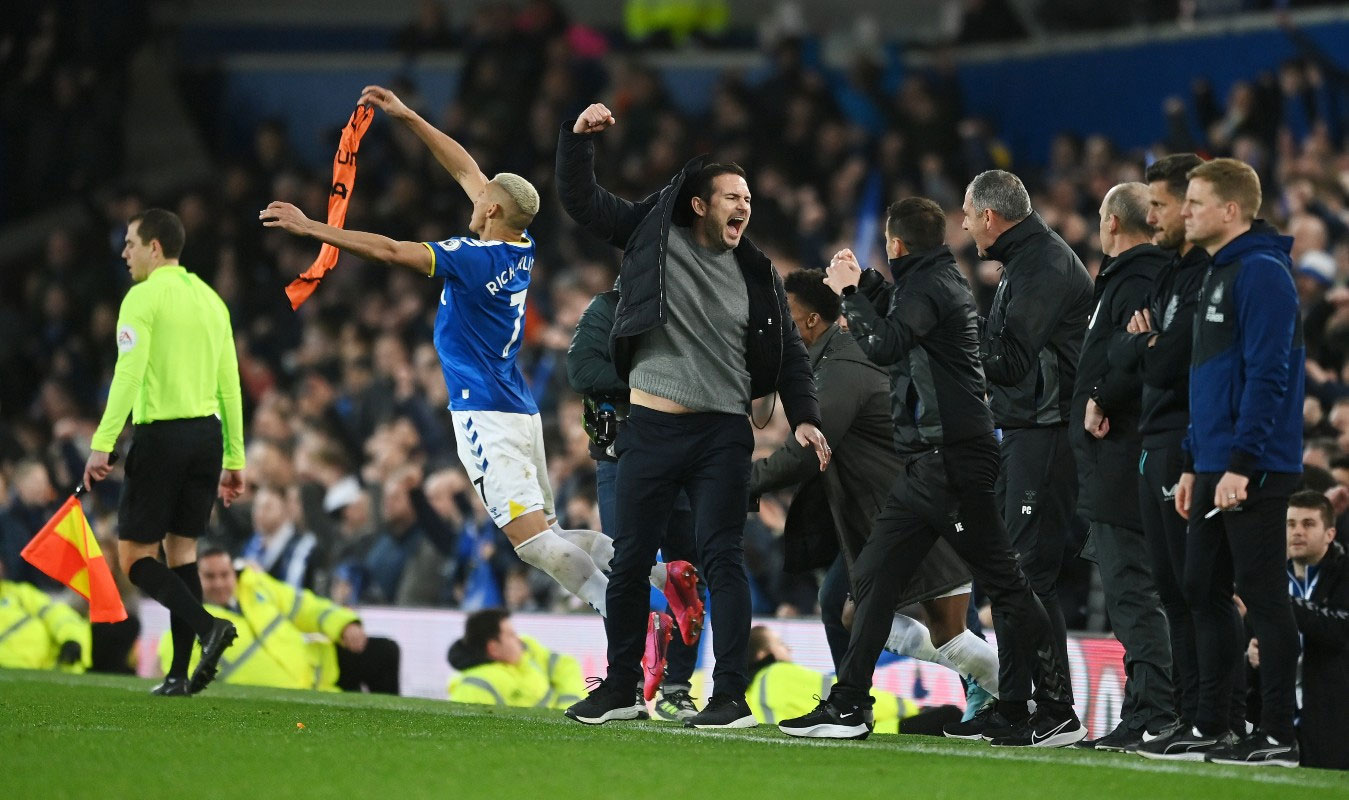
In selecting the man who would have to guide the Toffees through a period of austerity while also taking the team forward, Moshiri initially turned to Nuno Espirito Santo. The Portuguese had recently left Wolverhampton Wanderers, the club he had steered into the Premier League while garnering huge praise for this style of play, but he ultimately failed to win the Everton hierarchy over in his interviews. At one stage seeming a nailed-on cert for the role, Santo was rejected and Moshiri eventually took a huge gamble of a different kind, this time with the gallingly controversial hire of former Liverpool boss, Rafael Benitez.
Had the owner heeded the reaction when Benitez was floated as a potential successor to Ancelotti, he might have charted a different course but, despite internal and external opposition, Moshiri forged ahead and named Benitez as manager in late June 2021. While there was a contingent who would never have accepted a former Red as the Blues' boss (especially as they had never forgotten a "small club" jibe the Spaniard was deemed to have aimed Everton's way following a contentious Merseyside derby 15 years previously), the majority of Evertonians were prepared to grit their teeth and see what Benitez could offer, even if they had grave concerns over the fact that his career appeared very much to be on a downward trajectory.
He had won silverware at Chelsea in 2013 and succeeded Ancelotti as manager in Madrid the following year but his two most recent assignments prior to joining Everton had been with Newcastle, who were relegated under his watch, and Dalian Professional in the comparative footballing backwater of China.
And his task in winning over the Everton faithful would be made all the more challenging by the fact that the purse strings had had to be cinched tight following a warning from the Premier League that the club was in danger of breaching spending rules, which carried the threat of points deductions. As a result, Benitez was restricted to free-agent acquisitions like former charges Andros Townsend and Salomon Rondon while Demarai Gray arrived from Bayer Leverkusen for a cut-price €1.7m as the only paid incoming transfer that summer. Having been told in no uncertain terms by the manager that he was not part of his plans, James Rodriguez was sold to Al Rayyan in Qatar and Bernard left for Sharjah FC in the United Arab Emirates.
Benitez made a strong start to an uneasy life as Everton's manager, winning three of his first four Premier League fixtures but after making wholesale changes to the side for a League Cup Third Round tie against Queens Park Rangers and being dumped out of the competition on penalties, the wheels fell off his tenure. Between mid-September and the beginning of December, the Blues won just once and the pressure was building, not only on the former Liverpool head coach but Moshiri as well.
A 4-1 thrashing at the hands of the Reds, during which fans of the enemy from across the Park gleefully sang Benitez's name, was the last straw for many and a walk-out protest was staged by the NSNOW activist group during the subsequent home match against Arsenal. Paradoxically, the positive reaction from those who remained in their seats to cheer the team on prompted a magnificent response from the players and Everton ended up coming from behind to win the game with a dramatic stoppage-time strike from Gray.
It proved to be an oasis in a desert of poor displays and miserable results, though. Benitez would oversee a narrow 3-2 win over Hull City in the FA Cup in early January 2022 but it was one of only two victories in 15 games in all competitions and with the club seemingly in free-fall down the league table, the Spaniard was sacked in mid-January following a dismal loss to Norwich City at Carrow Road.
The lack of succession planning that had been so glaringly apparent the previous summer when Ancelotti bailed was still in evidence this time around, not helped by the fact that in an apparent attempt to appease Benitez, the club's Director of Football of almost three years, Marcel Brands, had been forced out the previous month. It would take almost two weeks before a new manager was in place. Duncan Ferguson, who, unfortunately, had been unable to repeat his memorable stint as caretaker in 2019 by overseeing a 1-0 home defeat to Aston Villa, was one of three candidates interviewed for the position but it was the largely unknown Vitor Pereira to whom Moshiri was set to turn before events forced a re-think.
The Portuguese, who had been interviewed and passed over by Bill Kenwright in 2013 while he was looking for Moyes's successor, lacked Premier League experience, had a chequered record that included relegation to Germany's second tier with 1860 Munich and, as such, was an unpopular choice with many fans. Graffiti sprayed on a wall outside Goodison imploring the hierarchy to choose Frank Lampard instead grabbed headlines while Pereira made his own with a bizarre telephone call to the Sky Sports studio where he publicly made his case for being the next Everton boss.
The episode was enough to alarm Moshiri, Kenwright and CEO, Denise Barrett-Baxendale, and following further talks that also involved former Toffees star, Tim Cahill, Lampard was duly hired with just three days left of the January transfer window remaining and the squad in need of additions to help stave off the very real threat of relegation. With Benitez having fallen out with Digne and then engineered the conditions for his sale to Aston Villa in early January, full-backs Vitalii Mykolenko and Nathan Patterson had been drafted in but Everton remained light in midfield.
Donny van de Beek arrived on loan from Manchester United and Kenwright agreed a complicated deal with Spurs for Dele Alli who was desperately searching for a way to kickstart a career that had been in tatters since injury and off-the-field struggles had taken hold. The former England star was signed for nothing on an intitial basis, with staged payments due to the North London club once he passed pre-agreed appearance milestones. As it turned out, neither player played a significant role in the Blues' rollercoaster journey between then and the end of the season, although Dele would step off the bench for one key contribution in the decisive match against Crystal Palace in May.
As the youthful antithesis to Benitez's stuffy and cold demeanour, Lampard's early impression on the squad was a positive one. Brentford were comfortably despatched 4-1 in the FA Cup Fourth Round in the Chelsea legend's first game in charge and though it was followed by a chastening 3-1 defeat in Newcastle, back at Goodison, the Blues recorded a convincing 3-0 win over fellow strugglers Leeds. Lampard would oversee just one more victory in the next eight League games, though, as his initial bounce wore off and the scale of the task he had taken on was revealed.
A harrowing 3-2 defeat at Burnley, in a match the Toffees had led at half-time, seemed to be the portent of doom that Evertonians were fearing. Everton lay just one place above the drop zone when Manchester United came to town in April with just nine games left in the season but a scuffed Anthony Gordon finish and a rousing all-round performance behind a wall of noise from the Goodison faithful carried the team to a 1-0 win.
The feat was repeated when Chelsea were the visitors to L4 at the beginning of May, this time with a full coach welcome, replete with blue smoke canisters, in the streets outside the ground. Richarlison capitalised on a defensive error to score the only goal of the game and after the team bus was seen off by another passionate crowd outside Finch Farm for the trip to Leicester City, Lampard's men were inspired again, running out 2-1 victors thanks to goals by Mykolenko and Mason Holgate.
The chance to effectively guarantee safety was spurned at Watford where the two relegation-haunted sides ground out a goalless draw and a home defeat to Brentford in the penultimate home fixture of the season meant that Everton needed to beat Palace to ensure that they didn't make the journey to face high-flying Arsenal needing any kind of result to stay up. But, just like that Wimbledon game in 1994, the Toffees got off to the worst start possible. With 36 minutes gone, they were 2-0 down to scruffy goals by Jean-Philippe Mateta and Jordan Ayew and potentially at the mercy of Burnley who were in action at Villa Park on the same night.
Lampard rallied his troops at the interval, introduced Dele for the ineffective André Gomes and then watched as his side completed one of the most memorable comebacks in the Grand Old Lady's history. Michael Keane's finessed finish off a set-piece pulled one back, Richarlison's sliced effort looped in to make it 2-2 and then, with five minutes left of the 90, Dominic Calvert-Lewin met an inswinging Gray free-kick with a majestic diving header to win it. Mathematically safe, the Blues travelled to North London in party mode and got spanked 5-1 by the Gunners but on a day when Liverpool were denied the title by Manchester City, no one of an Everton persuasion much cared.
Sadly for Lampard, while his popularity was sky high after leading Everton to safety, he would battle to keep things on an even keel in what should have been his first full season in charge at Goodison Park. A serious injury to Calvert-Lewin, suffered on the eve of the campaign and which would hamper his progress for the next two years, provided an early set-back and it left the boss having to fashion a forward line with the likes of Gray and Gordon as emergency strikers until a replacement could be signed before the transfer deadline.
With finances still tight, however, the search for a viable centre-forward under new Director of Football, Kevin Thelwell, was a difficult one and it ended, somewhat unsatisfactorily, with the signing of Neal Maupay from Brighton. The Frenchman would net just one goal in his entire career at Everton, the winner in one of only three Premier League matches the Blues won before Lampard was relieved of his duties a little over a year after Benitez had suffered the same fate. Back-to-back defeats at Bournemouth prior to the seven-week hiatus for the 2022 World Cup were an early indication that the relative novice coach was out of his depth and when results and performances continued to be dire when league play resumed, Moshiri and the Board of Directors were left with little choice but to sack yet another manager.
Dyche Fulfills His Remit with the Third “Great Escape”
If the Everton leadership's managerial short-list to replace Rafael Benitez had been small, the one used when it came time to replace Frank Lampard essentially featured just two names (Duncan Ferguson was interviewed for the role but lacked the experience for such a tough task): Marcelo Bielsa and Sean Dyche, two candidates as similar as chalk and cheese in terms of approach, demeanour and experience. Bielsa, the maverick Argentine who had led Leeds back to the top flight with a brand of energetic, fast-paced football, was out of work having left Elland Road the previous February.
Bielsa flew especially from Brazil to meet Everton officials and present a plan whereby members of his entourage would oversee first-team responsibilities while he assessed the squad from afar in preparation to take over in the summer where he would have a full summer and pre-season to embed his methods into the players.
For Everton, who were mired in 19th place and needed an experienced head coach in place as a matter of urgency to start dragging the club away from relegation danger, that was an unworkable arrangement which left Dyche, the former Burnley boss, as the only alternative. As it turned out, the gravel-voiced East Midlander was just what the Blues needed, as his first match in charge amply demonstrated. Under-pinned by a typically Dychean, backs-to-the-wall display and thanks to a headed set-piece goal by his former Claret charge, James Tarkowski, Everton beat title-chasing Arsenal at a raucous Goodison Park.
Important draws against Nottingham Forest, Chelsea and Tottenham were interspersed with vital wins over relegation rivals Leeds and mid-table Brentford but it wasn't enough to prevent the Toffees from being pulled back into the bottom three by late April on the back of a run of no wins in six, culminating in a frightening 4-1 home defeat to Newcastle where not even another blue-hued coach welcome from desperate supporters was enough to push the Blues over the line.
It meant that May dawned with Everton in deep trouble as they made the journey to Leicester who began the evening a point and a place better off with four games to play. Defeat at the King Power Stadium would almost certainly have sent Dyche's side down and as half-time approached the Foxes were 2-1 up with the chance to make it 3-1 from the penalty spot. Pickford guessed correctly and saved James Maddison's spot-kick, Alex Iwobi grabbed an equaliser in the second period and the Blues' survival quest moved to Brighton five days later.
What unfolded on the south coast against a universally lauded Seagulls team was nothing short of miraculous. Everton, who had won once away from home all season, scored after 33 seconds, romped into a stunning 4-0 lead and ended up winning 5-1. A home defeat to Champions-elect Manchester City was largely expected but a tricky away game at Wolves was pregnant with jeopardy as the battle to beat the drop went down to the wire. Dyche's men were heading to a potentially damaging defeat at Molineux when Yerry Mina, mystifyingly kept on the bench by the manager until the all-important last few fixtures, popped up with an equaliser deep into second-half stoppage time.
After the heart-stopping drama of a late save by Newcastle goalkeeper Nick Pope that denied Timothy Castagne an unlikely, but potentially crucial, winner for Leicester at St James's Park a few days ealier, the final day drama was set when Everton were at least comforted by the knowledge that if they won, they would be safe. As it turned out, with the Foxes winning at home against West Ham, it was imperative that the Toffees did. One goal would prove just enough, thumped home on the half-volley from the edge of the box by Doucouré, and preserved by a terrific late save by Pickford. Once more, the Toffees had survived by the skin of their teeth.
Dyche spoke in the immediate aftermath of that third "great escape" of the need for rapid change at Everton to ensure that days like that fraught occasion against the Cherries could be consigned to history: “It’s a big club, big history, but we are not performing like a big club. We have to find a way of changing that. This is two seasons now. There is a massive amount of change to build to a new dawn, a new future, a bigger future." That foundations for that new dawn were already being put in place on banks of the Mersey where, in August 2021, Everton had broken ground on the construction of a new 52,000-seater stadium at Bramley-Moore Dock. By the middle of 2023, that marvellous new structure was rising out of the docks but the club needed change to ensure that they kicked off in the new ground two years later as a Premier League outfit.
Dyche was determined to be at the heart of that change but his only full season at the helm was severely undermined as the over-reach of the Moshiri era came home to roost in the form of censure from the Premier League over spending. The Blues' hierarchy had dominated the headlines for the first half of 2022, beginning with their announcement in January that the Board of Directors would no longer be attending games at Goodison Park due to security concerns following an incident in the home fixture against Southampton where it was alleged Barrett-Baxendale was put into a headlock by a supporter as she was making her way back to the Directors' Lounge.
Evertonians were outraged by what they perceived to be the higher-ups deflecting attention away from the mounting protests against their performance and that of the owner by throwing the fans "under the bus". What was assumed to be a temporary measure extended to the end of the campaign and, come the summer, the chief executive resigned, along with non-executive director Graeme Sharp and finance director, Grant Ingles. Chairman Bill Kenwright remained in his post until his death later that year.
The massive imbalance in the club's revenue and expenditure that had been a feature of Moshiri's time at Everton had been exacerbated by Russia's invasion of Ukraine in February 2022 and first the suspension then the cancellation of the Blues' chief sponsorship arrangements with USM Holdings, the company owned by sanctioned oligarch, Alisher Usmanov. It was a hole in the budget that Moshiri was never able to fill and as he continued to take on more debt to fund the construction of Everton Stadium, the Blues were charged in February 2023 of breaching the upper threshold of permitted losses over a three-year period according to Premier League PSR. An independent commission eventually ruled later that year that Everton were in breach and handed the club a historic 10-point penalty that thrust the Toffees straight into the relegation zone.
An indandescent and indignant fanbase rallied along with the players and after losing at home to Manchester United in disappointing fashion, Everton won four games in succession to lift themselves back out of the bottom three. Unfortunately, that initial spasm of defiance petered out and Dyche struggled to produce results. Setting an unwanted club record for the Premier League era of 13 games without a win, surpassing Mike Walker's 12 from 30 years previously, the Blues hung around in the nether regions of the table and in danger of being dragged into another desperate struggle to avoid the drop as the season progressed.
All the while, Moshiri had been looking for the escape hatch and after an investment package with New York investors MSP Sports Capital had resulted not in a parial takeover but just a loan for stadium financing, the Anglo-Iranian agreed a deal in September 2023 with 777 Partners to sell his 94.1% stake in the club to the Florida-based private equity firm.
A steady stream of investigative articles, chiefly from Norwegian digitial magazine, Josimar, that unearthed the company's unsavoury founding by Joshua Wander and Steven Pasko as a predatory lender and catalogued its perceived miss-steps and precarious financial position, sowed great unease among Evertonians that their club was in danger of leaping out of the proverbial frying and into the fire. Indeed, as time passed without approval of the takeover by the Premier League, it was hard to see how 777 could fund the buyout and, if they could, how much further they would be able to take the Toffees beyond that.
What felt like a charade played out as the season stretched into its final weeks and a deadline passed on 15th April for 777 Partners to pay off MSP's loan as part of the Premier League's preconditions. Moshiri extended the arrangement to the end of May but the gig was essentially up — in the interim, 777's budget Australian airline, Bonza, was forced into administration, triggering the Miami company's own collapse.
On the pitch, a 6-0 thashing at Chelsea had sounded alarm bells that Everton's Premier League future was going to go down to the wire again. The club's original PSR points deduction had been reduced to six on appeal but a second charge for the 2022/23 season triggered a second penalty of a further two points, but another timely response and three home wins in the space of a week (including a memorable first Goodison derby win over Liverpool for over a decade) had them safe with three matches to spare.
With the summer bringing no clarity on the state of play vis-a-vis the takeover situation, finances remained as tight as ever; indeed, with heavy losses from previous seasons still weighing the club down in terms of the rolling three-year PSR cycle, Kevin Thelwell was again forced to wheel and deal in the transfer market while also arranging the sale of one of the Blues' most saleable assets in the form of Amadou Onana. Signed from Lille for £33m in the summer of 2022, the Belgian was sold to Aston Villa for £50m while Ben Godfrey left for Atalanta in an £11m deal and a PSR-skirting player-swap was engineered with Villa that saw Academy product Lewis Dobbin and midfield prospect Tim Iroegbunam trade places for largely the same fee.
That left enough wiggle room for Thelwell to land long-time targets Iliman Ndiaye and Jake O'Brien for a combined £32m and with Jesper Lindstrom, Orel Mangala and Armando Broja also arriving on loan before the deadline, hopes were high that Everton could either match the previous season's points tally of 48 (when the deduction from the Premier League was taken out of the equation) or, perhaps, push on and try for a top-half finish.
The reality proved to be very different. For the second season running under Dyche, Everton made a horrendous start to the season, losing all four of their opening matches and being dumped out of the League Cup on penalties at the hands of Southampton before they finally picked up a point against Leicester City in mid-September. A five-game unbeaten run that featured victories over Crystal Palace at Goodison and away at Ipswich hauled the Toffees off the foot of the table but the manager's struggles to produce effective attacking football that could generate enough goals to win games continued.
Defeat at Southampton in early November (Everton were the only team the Saints beat at St Mary's all season on their way to finishing rock bottom of the division the following May), followed by a 4-0 hammering against what would prove to be the worst Manchester United side of the Premier League era were further alarming signs that Dyche was ill-equipped to take the team forward. A rare thrashing of Wolves in early December 2024 was the only win he oversaw in an 11-match spell; worse, his side only managed to score in three of those games. So when Everton were humbled on the south coast once more in the first game of the New Year, this time at Bournemouth where they failed to register a single shot on target, the pressure on the "Gaffer" had reached an unsustainable level.
The timing of his Everton tenure going into freefall was important because just before Christmas, the club's ownership saga had finally come to an end when The Friedkin Group successfully bought Moshiri's controlling stake. The Houston, Texas-based firm had been positioned to complete a deal in the summer of 2024 when they entered into a period of exclusivity with Blue Heaven Holdings, only to pull out of talks a few weeks later. Into the void had stepped American businessman, John Textor, owner of Lyon and whose investment arm owned a 45% stake in Crystal Palace. Despite claiming that he was mere days away from selling those Palace shares that would have precluded him from taking more than a 10% interest in Everton, Textor's interest never firmed up and in September, the Friedkins re-emerged as the preferred bidder.
Three months of due dilligence and vetting by the League and FA passed before the takeover was ratified, installing billionaire Dan Friedkin and his hugely successful company as the club's new owners. TFG's plan was to use the rest of the 2024/25 season to fully assess what they had inherited from Moshiri, which included Dyche as head coach. The feeling was that their ambitions stretched further than the ex-Burnley boss but the new owners hoped he would be able to safely keep Everton in the top flight before a longer-term decision could be taken in the summer when his contract was up.
Results and performances soon dictated otherwise and TFG were forced into their first major decision within weeks of taking over. Just hours before an FA Cup Third Round tie against Peterborough, it was announced that Dyche's employment had been terminated with immediate effect and that Leighton Baines and Seamus Coleman had been handed the responsibility for overseeing that evening's game. It quickly emerged that Dyche had held emergency talks with the new ownership and indicated that he felt he had taken the project as far as he could. That left new Executive CEO, Marc Watts, with little alternative than to dismiss Dyche and within days, David Moyes was back as manager of Everton Football Club.