

‘Who’s the Greatest of Them All?’
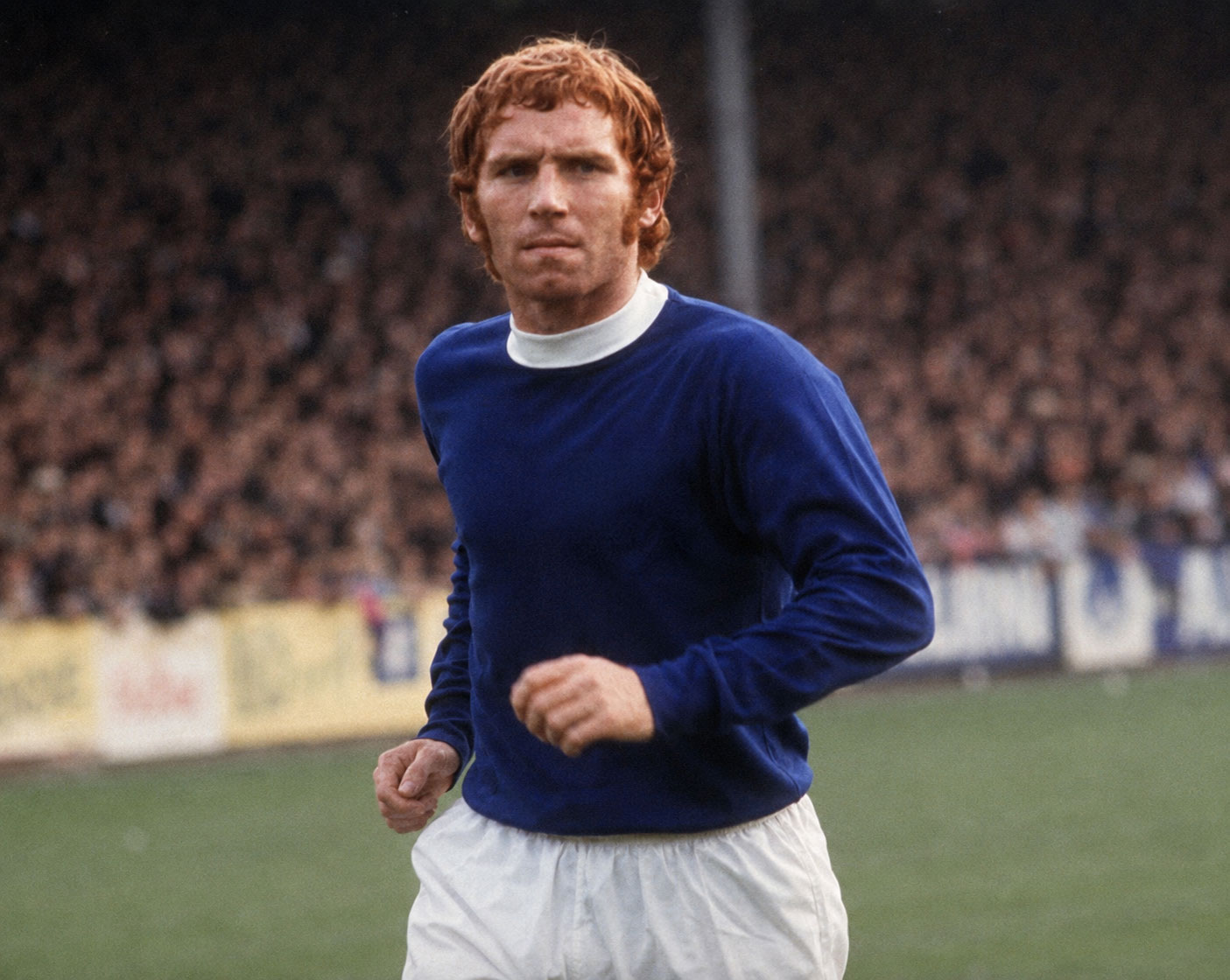
Little Curly Alan Ball! In August 1966, Harry Catterick wrapped up what many supporters of that era would contend was the club’s greatest signing in the post-War period.
Is it really 60 years…?
Two dates from 1966 remain etched in my memory. On 30th July, England won the World Cup Final. For Evertonians, of much greater importance was 14th May, the day of our FA Cup Final triumph. There is, however, another date from that year which should mean a lot to Evertonians of a certain age.
Quite simply on 15th August, 1966 Harry Catterick wrapped up the best signing of his career and, to my mind, the greatest in my lifetime. Many supporters of that era would contend it was the club’s greatest signing in the post-War period. He was a player who would make an immediate and sustained impact on the club and its supporters. Yet his transfer to our club came unexpectedly.
Back in the 1960s, decades before the onset of 24-hour rolling news coverage, we heard little about transfer deals until the day after their completion when photos appeared in the morning newspapers. That was especially the case during the Catterick tenure. Our inscrutable manager always kept his cards close to his chest, preferring to land his targets with a late swoop, leaving media and fans to digest the news after the event rather than speculate beforehand. There had been nothing in the press in early August to suggest Harry was about to pull off his arguably his most audacious transfer coup. When and how did we learn that he had done so?
Television news bulletins in the mid 1960s were usually of 10 minutes' duration — short and to the point with minimal sports coverage. Only the biggest football transfers merited a brief mention. Few made it into the opening headlines. When the BBC1 news bulletin opened at 9.00 p.m. on Monday 15th August, 1966 the news reader — in my memory it was Robert Dougall — ran through the usual headlines concerning domestic and international affairs. I had been paying little attention until one simple sentence, read quite dispassionately from the autocue, sent this 13-year-old into a metaphorical orbit.
‘In football, the England World Cup player Alan Ball, has signed for Everton in a British record £110,000 transfer’.
Or words to that effect. I hit the ceiling. ‘We’ve signed Alan Ball, we’ve signed Alan Ball, we’ve signed Alan Ball’, I roared, fists shaking, jumping up and down, limbs everywhere. My parents told me to calm down. Impossible! Sleeping younger siblings would have wondered why the house was shaking.
My wild reaction probably owed as much to the surprise as to the fact we had signed a world class player. For there had been nothing in the preceding days to suggest Bally was destined for Goodison. Speculation had been mounting over the months that Don Revie at Leeds was in pole position to sign the young star. In his 1978 autobiography ‘All About A Ball’ Alan recalled meeting Revie on at least three occasions on the moors on the other side of Manchester.
Recollections varied but according to Alan, Revie paid him £100 in cash at each meeting to tide him over until the Leeds board could be persuaded to increase their offer above £100,000. To Revie’s chagrin his directors refused to budge giving Catterick the opportunity to step in with a bid of £110,000 demanded by Blackpool.*
So out of the blue he was our player. And what a player! Imagine signing the man of the match from a World Cup Final! Kenneth Wolstenholme’s commentary …‘Ball, running himself daft’ was still very fresh in our memories. At 21 years old he was the youngest player in the England team, already a star but with his best years in front of him.
The following morning I cycled to Maghull in record time to buy the Liverpool Daily Post which, of course, was replete with photos and the full story of the signing. Of course, we already knew much about the qualities and character of the player himself. I had first seen Alan at Goodison playing for Blackpool in an otherwise nondescript goalless draw in October 1965. He was the best player on the pitch. With his ginger hair matching the colour of his club’s tangerine shirt, he was impossible to miss, not least when he took exception to a refereeing decision, as he was wont to do on more than one occasion. If we had a lingering concern about his disciplinary record there was evidence of growing maturity in that he completed the 1965/66 season without a single booking, having once earned nine in eighteen matches earlier in his career.
His tally of 41 goals in 116 appearances for Blackpool, mainly at inside right, would itself have attracted interest in any era. It was, however, his performance in the World Cup Final which brought him to national prominence as a bundle of dynamism, determination and skill; a player for the big occasions, a player who could transform a team through his ability and personality. No wonder Harry Catterick was determined to sign him. The confirmed fee was a record but proved to be a true bargain.
As supporters, we never had any doubt. Bally was an instant hero. Having opened his account in a 1-0 win at Fulham on the opening day of the season, he followed up with a brace in a 3-1 derby victory at Goodison. In the Street End we worshipped Bally. ‘All we are saying is Alan’s our King.’ ‘He’s here, he’s there, he’s every f**kin where, Alan Ball, Alan Ball’. ‘Who’s the greatest of them all? Little curly Alan Ball’.
We were so proud he was our player. At 5ft 6ins he stood taller and stronger than opponents unable to match his brio. He scored goals, he ran himself daft in his royal blue jersey, he drove his team mates to raise their game and, above all else, he entertained us. Near the end of matches, providing we held a comfortable lead, he would produce his party piece, sitting on the ball in open play near the corner flag. The crowd loved that. Even some opponents loved it. Chatting some years ago to Jimmy Montgomery, the legendary Sunderland goalkeeper, he told me he thought it was wonderful. Cheeky, but wonderful.
In the five years he was with us Bally was the heart and soul of the club. We had other brilliant players during that era and many since then but few came anywhere close to being in that elite group of the truly great players.
Alan Ball remains our club’s best outfield player since World War Two and one of our all time greats. That’s why his signing, on that day of 15th August, 1966 deserves a special mention in the club’s history. That’s why I will never forget hearing that truly wonderful headline from the BBC TV News. I eventually went to sleep later that night repeating the words ‘…. Alan Ball has signed for Everton…!’
* Subsequently it transpired the actual fee was £112,000. The definitive account of the transfer including the Leeds United interest is covered in detail by Gavin Buckland in his highly recommended book, ‘Money Can’t Buy Us Love’.
Reader Responses
Selected thoughts from readers31/07/2026 08:15:30
Great memories, I was 10, what a player and what a team.
Harvey Ball Kendall Labone Wilson Husband Morrisey West Trebilko Wright
A different world back then, arguably better.
31/07/2026 19:03:20
Kendall and Ball may of had the opposition crying but they’re nothing compared to big Jake O’ Brien! :)
01/08/2026 03:47:55
Just before my time I never saw Alan Ball play unfortunately. Truly world class & in terms of midfielders up there with the likes of George Best & Johan Cruyf by all accounts.
01/08/2026 11:16:36
Best ive seen in an Everton shirt.
A non acceptor of mediocrity.
01/08/2026 15:43:54
Yeah, August 15 was Christmas Day for Evertonians that year. What a capture. I can remember the surprise and delight. Then there was the pride in him being an Everton player... before the shock, dismay and depression at him being sold.
01/08/2026 17:45:20
It is right & proper that we remember our past so fondly in the way this lovely article celebrates.
A man who's committment knew no bounds and was conditional only on those around him sharing that belief; quite superb.
When Ball & co were in their pomp my age was much closer to theirs so many were like older brothers to me; a different perspective altogether.
However it is quite depressing to note that for many years our 'present' has accumulated very few characters and experiences which will form the nostalgia of future generations.
Today's young supporters deserve better.
I feel I am only a hairs breadth from the definition of a cynic which runs: a cynic is an idealist who has had his beliefs shattered.
Thank you Infantino for underlining my point.
01/08/2026 19:44:02
I was in the Queen Of Martyrs social club on Stonebridge lane in Croxteth, right opposite to the house were Wayne Rooney was born in, it was a Sunday night when it came on the news that we had sold him to Arsenal,
Cried my eyes out, what a player, best I've seen in a blue shirt, what made it worse was when I went into work on the Monday morning all the red noses were extatic.
01/08/2026 22:21:17
Great article John, I have similar memories of the night we signed him.
I had been playing knockabout football near my home in Billinge and walked into the house seconds after my dad had viewed the announcement on the BBC News.
The Man of the Match in the World Cup Final had chosen us in preference to the obnoxious Leeds and Don Revie who had been widely reported to have secured a deal with Blackpool.
My reaction was to run down the road and catch up three friends; the Evertonian jumped up and down for joy, the Manchester City and Wigan Athletic fans were unmoved.
Bally was without doubt the greatest in my lifetime; Rooney may have matched him had we been as big a club as we were in 1966 but sadly by the time the latter was given away by the despicable Kenwright we were already on the downward path.
All managers make mistakes but Catterick selling him to Arsenal was a catastrophic blunder eventually leading to his sacking.
I feel extremely lucky to have watched the greatest Everton player in the modern era so many times.
02/08/2026 07:28:00
I remember watching Everton with my Dad after the wonderful 1970 season and him saying 'Ball is nearly too good of a player,white boots and all. He is carrying the team.' Everton went from champions in '70 to 14th in '71, and I've wondered for 40 years if he was right.
My Dad was half-right. Ball did start doing everything, dropping deep, dribbling, covering everyone, but not out of ego, which he was accused of, but because of burnout.Catterick kept the same formation and did not rotate the players.Heceven called Ball big headed
The 1970 World Cup wrecked the squad and the rest was burnout. Labone's knees went, and the Holy Trinity engine stalled. Ball tried to carry a shattered team on his own, which broke the shape and made him the scapegoat.
His dominance wasn't the cause, it was the symptom. My dad spotted the fracture, just not the full story. Peak in '70, not the start of a dynasty.Have also fond memories of Gordon West, Tommy Wright and Keith, Newton. Interestly Gordan West got the call up to the World Cup Squad, but declined.I thought he was better than Banks, at the time.
England's recent performance in Mexico, seemed to go against the prevailing attitude to altitude at the 197O World Cup.Catterick brought Everton on a North American tour straight after it, which was considered madness at the time.
It will be interesting to see how the players that played react this season.
Ball was a exceptional and great player.
02/08/2026 09:52:38
It’s no surprise that all on here who witnessed Alan Ball play agree he was the best in a blue shirt.
As Billy (8) commented, Wayne Rooney would have stood shoulder to shoulder with AB had he remained at the club.
When I hear of players like Duncan Ferguson being acclaimed as an Everton legend, I shake my head. Simply no comparison.
02/08/2026 10:13:43
So the Ball deal would cost what - £180m in today’s money?
Whereas Rooney cost us nothing.
Hopefully we can find a way to acquire / develop to quality players without paying top dollar for them. Dibling has excellent ability but obviously is struggling to settle. Links to players like Nwaneri are encouraging too.
There’s no two ways about it, quality football and success relies on excellent players.
02/08/2026 11:09:20
Thanks for the lovely article, John. My first season was 1970/71. Alan Ball was everywhere. Ran relentlessly, endlessly. A ruthless tackler, could pass through the eye of a needle, ran with the ball, scored goals. Oh my, what a player he was.
Above all, he had a fabulous attitude and will to win. The standard bearer. He was Everton.
Every player we sign should be shown videos of Alan Ball for all the above. The 8 year old me cried when we sold him. I hope I live to see a better player in a blue shirt, but I wouldn't put any money on it.
02/08/2026 18:16:55
It wasn’t until the arrival of James Rodriguez that I saw anyone in a blue shirt who came close to having the skill of Alan Ball. No doubt in my mind who is The Greatest Of Them All.
05/08/2026 16:25:23
I was at the FA Youth Cup game v Sheffield Wednesday that Wednesday night 22 December, Catterick showed his face in the Main Stand, comprehensivley booed and made a quick exit.
10yrs old and having my idol sold and just before Christmas, completely despised Catterick from that day onwards.
07/08/2026 13:34:44
Excellent article, John.
I remember that announcement on the BBC. I’ve often wondered whether I imagined it, as nobody I’ve spoken to has been able to recall it - you’ve put my mind at ease.
Not only was Bally a magnificent player, he was a catalyst who made other players perform better, forging great partnerships with Kendall and Harvey, but also Young and Royle.
He’s the only player who brings a tear to the eye at the mention of his name.
07/08/2026 21:51:26
Great article, John. My favourite Everton player. The day I came home from school at lunchtime to be told by my brother, an Arsenal supporter, that they had signed him was my first gut wrenching Everton moment. Up there with the sale of Rooney, the appointment of Benitez and the return of Moyes.
08/08/2026 20:38:56
In 1998 I was working at an oil refinery outside Athens. The complex was so big you could only get round it in a van. The first day, my driver showed up; he spoke no English and I had no Greek. Still, he gamely opened the conversation:
“English?”
“Yes”
“ football?”
“ oh yes”
“ manches unite?”
“NO - Everton”
“Oh”
End of conversation
The next day, same driver. I get in next to him. He has a big grin on his face. Turns to me and says
“ALAN BALL!”
14/08/2026 14:00:41
The Greatest. No question.
Add Your Thoughts
Only registered users of Evertonia can participate in discussions.
Or Join as Evertonia Member — it takes just a few minutes and will allow you to post your thoughts on artices across the site.
31/07/2026 07:52:54
Wonderful memories John. I think he is the only player I have thought of in my lifetime as a true Everton legend.
I remember watching him from his the Boys Pen. I couldn’t believe it. The white boots in the flesh! This little boy was totally mesmerised. I remember even trying to talk like him in that husky voice!
Colin Harvey said the players were mesmerised too when they saw him in training. He was so good.
I also remember one of the saddest nights of my Everton childhood when five years after his signing he was sold to Arsenal.
What a player. What value would he be in today’s transfer market?