

City Scandal Should Be a Watershed Moment for European Football
If found conclusively guilty, Manchester City need to be summarily dealt with and serious measures be put in place to preserve the health and future of the Beautiful Game
It won’t be, but the concluding phase of the Premier League’s case against Manchester City should be the catalyst for a wholesale reckoning. Because while it’s never been more popular or as lucrative, football at the top of the English game is fundamentally broken.
If Chelsea’s admission of tens of millions of pounds in illegal payments to agents that helped facilitate their title wins in 2014 and 2017 hadn’t forever tainted that period in the League’s history — even while it’s greatest story, that of Leicester’s unfathomable triumph in 2016, was sandwiched in the middle — the City scandal will ensure that an entire era of the Premier League, from 2009 to the present day, will be littered with asterisks and overshadowed by corruption and malfeasance.
The scale of these ructions probably wasn’t foreseen by the traditional “Big Five” when they drew up plans for the breakaway Premiership in 1991. A natural inequality had, of course, always existed in the English game but the financial clout of Sir John Moores’ Mersey Millionaires, for example, relative to smaller clubs wasn't comparable with or as impactful as the gulf that exists today between the Premier League’s real “haves” and the other “have nots”.
The boom-and-bust cycle that saw Manchester United and Tottenham, for example, relegated in the 1970s — even Chelsea and Manchester City went down in the early years of the Premier League era — or allow for a team like Watford to win promotion one year and finish second the very next season in the early 1980s was intact.
For a little over 100 years, that natural cycle had ensured that dynasties like those of Huddersfield Town in the 1920s, Arsenal in the 1930s and Liverpool in the late 1970s and 1980s were either short-lived or were ultimately finite. Even the richest club in the land in the 1960s only won the title in 1963 and 1970 and managed just one FA Cup before largely disappearing from view until 1984.
The inception of the Premier League and the slow-moving explosion in wealth it ushered in upended that natural order and has led to the annual honours and financial spoils being concentrated in the hands of a small few.
The lid to Pandora’s Box was opened the moment Roman Abramovich and his unprecedentedly obscene wealth assumed power at Chelsea in 2003. It was thrown wide open, and the chaos that has ensued in the 17 years since was unleashed, when Abu Dhabi United Group (ADUG) were allowed to purchase Manchester City.
What was tantamount to a nation state, with effectively bottomless coffers at their disposal, taking control of a 130-year-old football club in a league characterised for over a century by parochial ownership and deep community ties… What could possibly go wrong?
It allowed ADUG to assemble arguably the greatest team in the history of the domestic game, managed by the world’s most celebrated manager. Pep Guardiola, an elite coach of elite teams (because those are the only ones he chooses to manage) would never have taken the post at the Etihad Stadium were they not one of the biggest clubs in the world but, having done so, he added 15 major trophies to City’s honours list, vaulting them above the likes of Everton in the ranking of England’s most successful clubs.
But those achievements, particularly their treble-winning success in 2023, have aptly been likened to Lance Armstrong’s PED-fuelled Tour de France victories — the result of “financial doping”, in the words of Arsène Wenger, on an industrial scale.
It was perversely ironic that that clutch of Premier League, Champions League and FA Cup triumphs was won just weeks after the Premier League announced that they had referred City to an independent commission charged with 115 breaches of League rules, transgressions that enabled Sheikh Mansour and Abu Dhabi United to amass a footballing empire and a team capable of sweeping all before them on the domestic and Continental fronts.
What is equally perverse is that it took the League five years to bring the charges against City and another three before a verdict was reached — an eight-year span in which, in addition to the Champions League, they won the English title five times, the FA Cup three times, and the League Cup four times. As they sit on top of the pile during this international break with a 100% record, they will, of course, be in contention to win any or all four of those competitions before the rest of the appeals and sanctioning process has run its course.
Given the precedent established by the Premier League’s censure of Everton (let’s not forget that they recommended the maximum penalty of a 12-point deduction) and Nottingham Forest, Manchester City should have the book thrown at them and hard. Their punishment should be massive in scale and commensurate not only with the extent of their apparent cheating but also the levels to which they obfuscated, denied and impeded the League’s investigation into their wrongdoing.
Nothing should be off the table, including expulsion from the Premier League. A points deduction that merely guarantees relegation to the Championship would only see them back in the top flight within a year, able to continue on as nothing had happened. Which is why massive fines and a multi-year transfer ban should also be on the menu when the commission into the sanctions to be meted out meets in the next few weeks.
And if Everton are unsuccessful in their appeal against Burnley’s claims for compensation based on the Blues’ 2022 PSR breach, the worms will already be out the can when it comes to a litany of similar lawsuits that can be brought against City by a host of clubs who were denied titles and qualification for the Champions and Europa Leagues during the period in question. Everton, in 2009 and 2014, would, of course, be among the aggrieved parties and have a case for pursuing lost revenue in the tens of millions.
Let’s not pretend, though, that the rules that eventually became PSR in 2014 and SCR as of this season are not wildly anti-competitive and are what prompted ADUG, under the auspices of chairman Khaldoon Al Mubarak, to bend, break and circumvent in the first place those spending limits in a bid to rival and then overtake the traditional Premier League powerhouses of Manchester United, Arsenal, Liverpool and, the later-comer, Chelsea.
Though supported by a majority of member clubs, including the likes of Everton, Newcastle United and Aston Villa who have either broken the “Big Six” stranglehold on the top four or are hopeful of one day being able to, they amount to the cabal that attempted in 2021 to form the controversial European Super League (ESL) pulling the ladder up behind them and ensuring that no one could ever conceivably “do a Leicester” again.
Even remaining as perennial Champions League qualifiers has become a Herculean task as the Magpies (despite being backed by a Middle Eastern sovereign wealth fund of their own) and Villa have discovered over the past couple of years. Being forced to sell their best players — to Big Six clubs, it should be noted — to remain PSR and now SCR compliant means that they are no threat to the latter’s hegemony and could struggle to finish in the top five this time around.
In its current guise, the Premier League as a 20-team sporting competition is a farce; rather it is a two-tier corporate environment with a small elite able to vastly out-spend the rest and hoover up the best talent, thereby keeping a proverbial boot on those below them who might one day become pretenders to their throne.
Limits based on squad cost ratios simply favour those clubs who have, through repeated qualification for the Continent’s most lucrative tournaments, amassed the highest revenues, the biggest commercial and sponsorship deals and the widest global followings. It’s why the Champions League and, arguably, the Premier League that Everton helped found before it, is one of the worst things to have happened to football.
Importantly, top-to-bottoming anchoring, that would have benchmarked each team’s spending capacity to the revenue of the bottom side, was rejected by the member clubs last year. Such a measure would have represented a big step towards a more competitive landscape but would have put English clubs at a disadvantage to the biggest in Europe who would not be operating under the same constraints.
It’s why, for the health of the future game, SCR in England should be scrapped and standardised squad cost ratio rules that include such anchoring as to effectively cap player salaries and curb out-of-control transfer fees should be imposed across all five of the Continent’s biggest leagues as a matter of urgency.
Because while true equality will never be possible between clubs like Manchester United on the one hand, with their massive worldwide following and designs on a 100,000 seat stadium, and Bournemouth, and their 11,000-capacity Vitality Stadium, on the other, the rules should allow for the latter to operate on a more level playing field than the status quo.
And the framework of regulations should encourage rather than stymie clubs who operate on the sound, live-within-your-means financial footing being employed by The Friedkin Group at Everton, even if we’d like to see a good deal more ambition and envelope-pushing from our American overlords.
It should better reward the likes of Brighton, Bournemouth and Brentford, shining examples of clubs who have sought to narrow what is, in reality, an unbridgeable gap between themselves and the richest teams by implementing innovative recruitment strategies and player-trading policies that have helped make the Premier League as competitive as it has been outside that top five or six for the past couple of years.
All of that would require both Premier League and that cabal of its richest clubs acknowledging what has long been lost — that their raison d’ětre is sporting competition not a collection of rival businesses competing as much for sponsorship revenue as they are for silverware. That the Champions and winners of the domestic cups will, with rare exception, come from that small handful of massively-resourced teams. Pigs might sooner fly, but we live in hope.
First, though, the Premier League’s rules around spending and their enforcement mechanism must be shown to have the same teeth that they did when Everton and Forest were on the end of them. Manchester City cannot be allowed to escape with a mere slap on the wrist like Chelsea. They need to be summarily dealt with and a serious conversation had about the health and future of the Beautiful Game.
-

The “Commercial Suicide” Myth — Manchester City Are Not Too Big to Nail
The repercussions for City have to be proportionate to the seriousness and extent of their crimes. To act otherwise would be to compromise the very integrity of the Premier League. -
Of Power and Influence
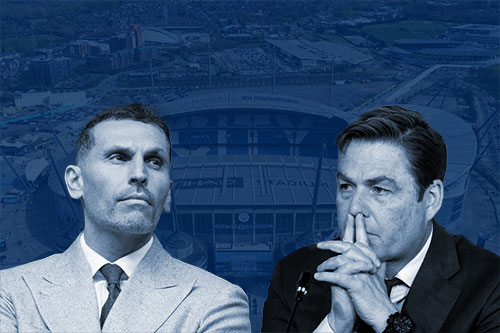
Manchester City had enormous influence over the Premier League and other clubs. Along with three or four others they have held sway in the room. If found guilty, the punishments should be harsh but the Premier League bear a measure of responsibility as well. -

Everton’s unbeaten run halted by humbling defeat to Chelsea
The Toffees were left to count the cost of dropped points in earlier games and some perplexing selection decisions by the manager as they came up depressingly short against the Londoners
Reader Responses
Selected thoughts from readers27/09/2026 07:06:05
I do also think that punishments, and properly enforced regulations, are the only things that will keep the big clubs in check. They need to be applied fairly across the board.
I’ve started to think that the financial bubble the elite clubs exist in is self sustainable. That they now have a continuous stream of money coming into what is a closed and well-protected market.
Many have predicted that it will burst at some stage. Well, we've had several large global recession since the PL really kicked into gear. Finances have only gotten better for the elite clubs. Football seems to be a recession-proof commodity.
Sky have seen off all competitors and dominate the market. People will always want a Sky package for Christmas or their birthday. It's cheaper to sit in now with a Sky package than go to the pub, or the game, or the restaurant or the cinema or the theatre on a weekly basis for many people. Going outside the front door is becoming less of an option now for many people, as the cost of living continues to go up.
Sky will always have money for the PL deals, and will always want the elite teams onside. Club's commercial deals work in part because the commercial company's logo is being piped into millions of homes and pubs by Sky. It's hand in hand.
What you would hope may level things a little, is that there are more European spots available. More clubs will qualify, will bring up their coefficient, will build their revenue and brand, will build their experience and squads. As a result, more clubs will become more important and more relevant to the PL authorities. Their hand will be forced and they have to be more egalitarian as a result.
27/09/2026 08:18:51
Kieran#2
TV revenues have actually plateaued, so tangible income from stadium and infrastructure, and how regulation is coped with, are the future growth areas. Lyndon, in the article, has put flesh on the bones of what we all know.
The Premier League was set up to manage the income streams of the elite clubs, never to actually regulate them. They had to make some shape at it with fan-led revenue, which resulted in the current regulatory process, where they allowed the Independent Commission to run amok. They needed to show results, so the likes of Everton were expendable. Everton did well to survive. By being the tough organisation that the Premier League is, they could not keep pigs like Burnley out of it. This has caused a precedent they now have to handle to survive themselves. They have worked out a solution: internal arbitration.
City cannot appeal to the Court of Arbitration for Sport (CAS) in Switzerland, as they did regarding their UEFA ban. They can go one better than that with the Premier League’s internal arbitration. Hence the lack of information surrounding it.
As for government intervention, it is not within its remit to impose financial sanctions or get involved. It can ban owners and directors, which is not going to happen in this case. The government has pulled back on investigations into Saudi interests in the past, and as for the Abu Dhabi ecosystem, which acts similarly across all asset classes as we have seen in football, it will not touch it with a bargepole.
As far as Everton are concerned, they have weathered the storm, and their appeal against compensation and the new arbitration route should see their fine reduced. Everton have to concentrate on developing the stadium, the infrastructure and how they manage the regulatory environment. TFG are falling short in infrastructure and UEFA multi-club regulation. UEFA are much better than the Premier League. It is only in these areas that Everton can progress in the new paradigm that football finds itself in. Hoping that regulation—always too late everywhere—will restore some imperfect past is just wishful thinking.
27/09/2026 09:06:12
Jerome, when thinking about what you've just posted, it makes sense that clubs like Chelsea have a hotel. Diversifying and expanding your revenue streams is hugely important. If football is becoming more and more commercialised then make the most of it.
There have been discussions on here about us buying the land around BMD. Commercial opportunities should be driving something like this forward.
You would hope alright that we have learned some hard lessons from the regulations being implemented. Giving out about Coty is only a small part of things. We need to make sure we look within first and foremost.
27/09/2026 11:30:24
It will be a watered down whitewash, the Premier League would have sooner quietly swept the charges under the carpet. It's only gone ahead because of the young man who hacked into City’s computer.
Chelsea were let off lightly so I expect City to be the same, the question is if truth be told how many other clubs have got away will dodgy accounting.
Nothing is straight when monies involved, especially lots of money.
City’s biggest penalty is their loss of reputation
27/09/2026 11:42:30
Jerome, I think we have to hope for some better regulation emerging from this mess. The punishments handed out so far have not been proportionate or consistent, and worse the potential for ongoing litigation is just out of control.
How to draw a line under this? How about the prem sets out that the City punishment is to be applied and then review the whole system, press the reset button, so that this can never happen again.
lets have transparency, clarity, fair play on a level playing field.
In ordinary life the richer you get the more you are taxed, lets apply that to football clubs too, keep a SCR and "tax" super rich clubs with the funds being reinvested in the game as a whole, from grass roots up.
Slowly the super rich lose unfair advantage.
I wish this system could be applied to the worlds super rich outside football too, the world used to be run by governance and diplomacy, now its all about money and power, and its cancerous.
The health of the game, and the planet, needs common sense fairplay. I can only hope.
27/09/2026 11:53:56
Kietan#4
Even the Nelson Dock and so called blue plan that Chong hinted about has not clarity. The City breaches and how the appeals procedure has opened up to arbitration has to be pursued by Everton. TFG confidence statement regarding the breach of Uefa Multi Club rules does not inspire confidence, as them continuing to ignore the Finch Farm option also does As a Anchor in a Dock development we should be hoping for more.
City will be fighting tooth and nail, as will the other Silent ones, like our neighbours seeking whatever advantage they can get. the regulatory situation is something to be managed like everything else. On the Uefa Multi Club rules TFG are behind the curve.
27/09/2026 12:25:47
Raymond, reputation will be lost to some degree alright. I would be interested to see if club sponsors pull out of deals, or walk away when it's time to renew them.
The Middle Eastern owners may or may not decide to sell up and walk away. If City aren't beneficial as an asset in terms of sports washing, then they have no value.
Andy, genuine question, text often sounds sarcastic when you don't mean it to, but is that now how the tax system already works? The more you earn, the higher your tax bracket. Or do you mean an extra tax again?
Like most billionaire types, you'd just go off shore?
27/09/2026 12:59:46
The thing that would actually hurt Man City and deter others is a points deduction proportionate to ours. That would seem to send City into League 1 / the third tier. Compensation claims from other clubs could blow things apart too.
Anything that avoids any kind of relegation would appear to be an open invitation for the richest clubs (who already have a huge baked in advantage) to break rules - and take the punishment now and again. Sadly, that might be outcome. The Premier League probably isn't rigged as such but let's be honest, it is not a fair and truly competitive environment either.
To be honest though, our big problem with the Premier League and the rich club stranglehold is that we have completely failed to capitalise.
By rights, we should be inside the Rich Club cartel. We were extremely well placed to do so at the start of the Premier League era and have had numerous opportunities in the last 30(+) years to jump on board. That we are not rich is the fault of our owners for the past 30(+) years who have all generally be too self-orientated, vain and incompetent to make this happen.
It takes some serious incompetence for a club ever present in the Premier League since inception to remain one of the poorest 10 - left behind by the likes of Brentford in the transfer market.
If City are relegated, then it will leave a vacuum for a season or two - and that could potentially mean a change of strategy for TFG. It would be a rare opportunity to steal a march on the rich 6, just as Newcastle and Villa appear to be in a transitional period and Spurs keep seeming to make a pig's ear of things.
27/09/2026 13:32:45
Great article Lyndon.
Professional football has never been a level playing field.But the level of inequality now is absolutely off the scale. So many clubs nowadays know that all they’re really doing is making up the numbers. Deep down, they know it’s unlikely in the extreme, due to the game’s current financial climate, that they’ll actually win anything.
Domestically, it’s pretty much the same teams winning the title and getting to League and FA Cup Finals season after season. How many times have Chelsea and Liverpool faced each other at Wembley in the last 3 or 4 years?? As a bit of football traditionalist, I honestly think there’s something sad about realising that a vast glass ceiling is now place for the vast majority of clubs.
As I said at the start, it’s never been a level playing field, but back in the late 1960’s when I started to love the game, at least a lot more clubs felt they had a reasonable chance of achieving something. For example, between 1966 and 1972, seven different clubs won the title in seven consecutive seasons, and the FA Cup was won by thirteen different clubs in thirteen consecutive seasons!! I use 1966 simply because it’s an obvious focal point in the game due to the World Cup. But here are respective winners to prove my point:
League Title
1966…Liverpool….Cup…Everton
1967…Man.Utd….Cup…Spurs
1968…Man.City….Cup…West Brom
1969…Leeds…Cup…Man.City
1970…Everton….Cup…Chelsea
1971…Arsenal…Cup…Arsenal
1972…Derby…Cup…Leeds
1973…FA Cup winners only…Sunderland
1974…Liverpool
1975…West Ham
1976…Southampton
1977…Man.Utd
1978…Ipswich
When you also take into consideration that QPR, Swindon and Stoke all won the League Cup during this period, and that Fulham, Newcastle and Norwich all reached domestic finals, it highlights my point that back then a lot more clubs felt they at least had some sort of chance. Now, there’s absolutely no way that the next seven Premier League titles will be won by seven different clubs.
Fans in this country used to laugh at the leagues in countries such as Scotland, Italy, Portugal and Spain, because it was the same two or three clubs always winning them.Because of Bayern Munich’s domestic dominance, some people have recently adopted a similar condescending attitude towards the Bundesliga.But let’s be totally honest here…the Premier League in it’s current format is probably no better than any of these leagues. Because even before a ball was kicked in anger on the opening day of the League, we all knew which two or three clubs would likely be winning it. And the fact it wasn’t always like this is what saddens me.
By the way, apologies for coming across as a bit of a “Statto”!! But hopefully it worked!!
27/09/2026 14:32:36
David you are right - the inequality is now baked in.
The rich clubs who generate the global revenues are positioned so that they win everything. Everything is stacked in their favour:
- the number of subs allowed (so they can make the most advantage of their huge, deep squads)
- elite academies, youth player trading etc allowing for talent hoarding (where most of the best players in the Championship are loanees from the Premier League)
- the sustainability rules (which prevent rich upstarts breaking through as Chelsea, City and PSG have all done fairly recently)
- revenue distribution, ploughing the greatest share of the money back into the richest clubs
- refeering (which let's be honest, simply isn't fair)
- the media coverage (which acts as a propaganda tool in favour of the established clubs) and associated fixture scheduling bias
And so on and so on...
The point of each televised game is that the rich club with glamorous players puts on a footballing show, scores plenty of goals and wins. That is global audiences are tuning in for.
In this TV & advertising revenue driven environment, the opposition is there to put up a decent competitive fight but ultimately be beaten.
Those outside of the Rich 6 (or so) accept this system because they make more money than they were doing when the league was a bit more competitive (albeit still not hugely competitive).
Which is why it is so deeply annoying that we squandered a brilliant opportunity to part of the Rich 6 and yet we remain on the outside looking in.
27/09/2026 16:05:56
Andy #6
Unfortunately that is the way it is.I would have hoped like you that regulation would work, but I do not think it is within the remit of these power investors.
They just see it as something to get round and blatantly ignore in achieving their objectives.
Kieran #Various.
Just to clarify what we are dealing wishm
Abu Dhabi’s Abudabi United Group (ADUG) is private, but its owner, Sheikh Mansour, is Vice Chairman of Mubadala—so it’s deeply tied to Abu Dhabi’s sovereign wealth network. ADUG bought Manchester City, which became City Football Group, a global multi-club portfolio widely described as a tool of Emirati soft power.
Saudi Arabia took a different route. In 2021, Public Investment Funds(PIF) led the Newcastle United takeover. In 2023, it took 75% stakes in the four biggest Saudi Pro League clubs—Al-Hilal, Al-Nassr, Al-Ittihad, Al-Ahli. It didn’t buy the league outright, but it effectively controls its top tier.
Abu Dhabi bought a club and built a network. Saudi bought a club, then reshaped a league.
My Son who dealt with a Abudabi Sovereign connected company told me they play by their own rules.So you can quess what their attitude is to the Premier League.
Robert#11
A poster on Evertonia who's Grandson is at City's Academy and who has been at Finch Farm, said no wonder a young lad would go their having visited him there.City spent £200m on their facilities, Everton built Finch Farm for £17 million and spent £4 million since financed by a Council Loan.Obviously Finch Farm option to buy back at £17m this year is not worth it.That is why I point out the infrastructure deficit, which TFG show no shape at addressing. Actually the whole move from Bellefield was a Kenwright rip off.
27/09/2026 16:26:23
Spot on Robert, you make a lot of very valid points there.The media side of things is particularly interesting. I cancelled my Sky football subscription last year, because of their obsession with the Sly 6. But I still have access to Sky Sports News.But even that annoys me because football wise, their main focus is still the Sly 6!!
Like the sad individual I am, I decided to conduct a little experiment recently. At any given time, morning, afternoon or evening, whenever I put Sky Sports News on, I made a mental note of which Premier League teams they were featuring or talking about at that particular moment. And I very much doubt anyone will be surprised to hear that on most occasions, it was something concerning one of the Sly 6 that was being debated!! Very, very rarely would I put the channel on and find someone discussing the current situations and possibilities of Brentford, Brighton, Fulham etc. Or Everton.
So not only are the Sly 6 dominating the televised fixture schedule, they’re also dominating the Sky Sports News channel too!! And because of the all important “global” audience agenda, Sky are clearly quite happy to go along with this, and continue accommodating and enabling these clubs to constantly keep their profiles in the media spotlight.
27/09/2026 17:16:36
It's only to us fans, that this is a sport. To the people running the Premier League, it's a business.
Fairness, and equality aren't business terms. It doesn't matter to the people at the top, if the same few teams are winning everything, only that Premier League inc. is making more money. As the fans aren't going anywhere, anytime soon, then they will see no reason to change anything.
Man. City's punishment won't be allowed to hurt the brand, if it's a big punishment, it'll be because the Premier League will still get their money from the other cash cows. If City are now vital to their profits, it will only be a slap on the wrist.
To the League, City's only crime was getting caught!
27/09/2026 17:25:20
John, it may well.be the case that the brand is everything.
It's a dawned if you do, dawned if you don't for the PL. Give one of you cash cows, one of your heavyweights, a kicking they deserve, and you lose them. Don't give them a kicking, and you're seen to be weak and ineffectual, especially given the number of charges.
27/09/2026 18:19:43
David, I've noticed that too. Teams outside of the sky six get very little air time. With Sky News in particular, if its not on a Sky sports channel, it doesnt exist as a sport.
I am doubtful that the majority of pundits and journalists would be able to give you an analysis of a Brentford squad, or a Brighton squad, or an Everton squad, in anywhere near the same way they could for City. Arsenal or Liverpool.
I've gone on at length about narrative. The narrative in the media around City will always be lenient, will always be softly softly, when it comes to convictions and consequences.
I mentioned towards the end of last season that there was a morbid enjoyment on Sky Sports news to Spurs' apparently death spiral. You won't get it with City.
Liverpool falling away last season and this one, expect sympathetic reporting.
27/09/2026 18:31:58
What you wrote in your final sentence makes a lot of sense Raymond@5, but my own view is that people just don’t care about this as much anymore?
I might be wrong but often when you see a player cheating nowadays, it is followed with the phrase “he had a right to go down” Life has changed, outraged at everything but ashamed of nothing, used to only apply to fans of a few clubs, but I think this has changed and “win at all costs” now applies right across the board?
I’d fuckin love to see us cheat and win the lot, was what my son said, but he’s only been watching Everton, for 26 years and like he said, he’s seen England playing in more fucking finals than Everton
27/09/2026 21:21:25
I wonder if there's a cohort of City fans who wouldn't care if the full set of sanctions were applied. The older generation of fan who saw the very lean years, the season in League One. They've lived through success they never dared think of, even in their wildest dreams.
It may well all be worth it. The revenue streams from the stadium alone, and yes, I know they don't fill it even now, would still put the club at an advantage. The Academy and young fringe players would probably make a decent go of promotion from the lower leagues. There's probably a list of decent managers who would be happy to take the club on.
28/09/2026 02:13:52
The cheating bastard owners of City, and the very players and staff who were now knowingly by them and all sides paid way more than their contracts allowed MUST be punished to a new maximum.
The club should be deducted 60 points this season, and a relegation to division 2 minimum.
Yes, that would mean the team finishing runner up this season in division 2 at Wembley would also have to be promoted, but so what? They'd then merely be where City were shortly before their bent owners took office.
And then there's the players and staff who were paid way more than their contracts dictated.
They should all be suspended from football for at least one season. They all knew the score and took the unlawful money regardless of fairness or accountability. They're all as bent as the bastards paying them.
Guardiola especially, a shithouse whose never taken a manager job at anything but a very wealthy club.
Monetary compensation to every club competing in the Premier League in the relevant lengthy period when City were bent (and they're still bent, let's be honest) should also be taxing on them, to the hopeful mega-advancement of allegedly "small" clubs such as Leicester in 2016.
28/09/2026 11:29:14
the EPL is a cesspit. It's not just City, it's all of them. My guess is the PL's reluctance to bring this to the boil is cos they are all living in glass houses, and are wary of City drawing this to everyone's attention if they are singled out. In any event, with the finance they have this is just one further stage on the journey. Nothing is going to get done here for years. the appeal will be lodged, and round and round we go.
28/09/2026 12:29:43
I do genuinely fear for City as a going concern after this.
The number of other clubs that can (and almost certainly will) sue them will be huge. Every year over approx 10 years nearly every club in the league charging for that one place lower down prize money lost. Plus interest.
There are players that will have had bonuses if they had finished in a European place or not been relegated. Plus interest.
Teams and players in Europe after their money (plus interest).
We're talking easily hundreds and hundreds of millions of pounds in fines.
And all this against a likely backdrop of the club being relegated (potentially for several years) and the owners having to finance everything going forwards for a brand with a reputation so badly tarnished, likely stripped of all of the trophies, that they could easily just decide that it's not worth it.
29/09/2026 15:11:57
I agree with everything you say in your piece Lyndon, and in the Fan View piece by Christine. There is plenty to keep the avid reading going for hours throughout the media outlets if you care to indulge, and wouldn't it be good to see someone other than ourselves (and Forest) whipped (metaphorically) into submission by Masters and his cronies for a change. Wouldn't it be great if they had the book thrown at them?
But deep down, really deep down we kinda know it isn't going to happen. Do we really believe at the end of the day (year, decade?) that City will be punished over the 114 charges currently being levied against them. No, there's not a chance of it happening and if there are any charges left upheld after an appeal it'll be for minor offences punished only with a fine.
The Premier League had the chance to be tough on Chelsea and look happened there. And of course City's previous sanction by Uefa of a two year competition ban was consigned to the bin at the first sign of their legal team knocking on the CAS door.
I hope I'm proved wrong, but I just don't think Masters is strong enough to face City's lawyers, and as for his appeals independent board, ahem, yeah right.
29/09/2026 21:40:15
Luckily for Masters, Mark, he won't be facing City's lawyers himself. That'll be down to the Appeal board but what was laid out in the Premier League statement today strengthens their hand substantially.
The charges of which City have been found guilty are staggering and I can't envisage a scenario where the sanctions level against them aren't just as massive. Otherwise the rules mean absolutely nothing and neither does the good-faith contract that the 20 member clubs enter into with the PL.
They may as well just pack the whole thing in if there aren't serious repercussions here.
30/09/2026 05:36:39
Chris #22, City's owners have infinite resources. They are not individuals, or businesses, or corporate entities who must display balance sheets and answer to stockholders.
They are Abu Dhabi, capital of the United Arab Emirates, the third wealthiest nation on the planet with $2.5 TRILLION sovereign wealth. They generate over $400 billion in annual GDP.
And it is a lightly populated authoritarian country run by seven emirs who answer to absolutely nobody on earth except each other. Superpowers cater to them.
You need not fear. Manchester City is definitely not going out of business.
30/09/2026 06:12:47
Mike, showing my ignorance here, I'm definitely not Paul the Esk. How will the club/owners produce the money formally through the books to pay the fines? How will the money be SCR/PSR compliant?
I agree with your point though, less than a million total in fines and potential compensation, is loose change to City's owners.
Im sure the club has cash reserves that will probably remain separate to how the fines are paid. As a going concern, it will be alright, even without the owners stumping up.
30/09/2026 07:36:37
This is how people with unlimited wealth and power act day in day out in all walks of life around the world. So how much responsibility are the PL going to take for allowing such owners into the league in the first place?
Anyway, I hope Ndiaye, a player who completely downed tools at the end of last season to protect himself for the World Cup and a move to a “bigger” club, enjoys getting lumps kicked out of him in non league on a weekly basis…
30/09/2026 10:09:22
In four of the nine seasons Man City have been found guilty of financial breaches, Everton missed out on European football because City finished above them in the Premier League.
In a fifth season, 2013/14, Everton finished fifth and qualified for the Europa League, when the top four - including champions City - qualified for the Champions League.
30/09/2026 10:37:17
The 2013/14 season is particularly sickening, Steve.
At that point, we were an exciting young team playing some great football under a transformational manager - but needed more money to keep the momentum going as the squad depth was really poor. With Champions League qualification - and the money that brings - the last 13 years could have been very different.
It also pre-dates the more (financially at least) questionable period of Moshiri / Usmanov ownership which might not look good for us under more scrutiny.
30/09/2026 18:17:11
Kieran #27, I'm equally ignorant in that area. No idea.
30/09/2026 18:20:45
If only this had been Liverpool!
30/09/2026 18:29:50
The EPL should:
1. Relegate them to League 2 effective starting next season.
2. Throw them out of the Premier League immediately, and give them the rest of the season to sell off their players / restructure
3. Hit them with financial penalties that compensate the loss of income teams failed to realize.
4. Immediately kick them out of the Champions League.
5. All teams playing them in 2026-2027 have their result removed - 19 teams moving forward this season. If you were scheduled to play them, you have a bye week. All results up and to this point removed.
They completely screwed the integrity of the game. Throw the kitchen sink at them.
Money truly is the root of all evil.
30/09/2026 19:07:06
I completely agree, Jamie.
However, what would do if you were Man City, backed by some of the richest most influential folk on earth and have known this is coming for a good long while. A sharp operator would have used the time to do some proper digging on the other clubs.
Arsenal - significant Usmanov influence before Kroenke took over (assuming Kroenke is clean)?
Liverpool - extensive use of performance enhancing salbutamol - allegedly for asthma sufferers?
Man Utd - the Glazers?
Chelsea - got off very lightly for the Abramovich era misdemeanours but that could be the tip of the iceberg?
Everton - Usmanov and Moshiri?
Forest - plenty of rumours about how Marinakis earned his fortune?
Newcastle - could the same opaque structure exploited by City have been used by their Saudi owners to fund the big initial wave of spending?
The list goes on.
If the "just" punishment you have outlined doesn't happen - it might be on the principle that people in glass houses shouldn't throw stones.
30/09/2026 19:19:37
That would be the perfect scenario in many ways, imo Robert.
I remember being a kid and the person who ended up being the biggest cheat, often only started cheating because everyone else was doing it!
30/09/2026 20:47:11
Robert -
This has to be the EPL fear.
Were I Man City, devoid clearly of a soul, I would have my attorneys go 100% scorched earth and dig up as much poo-poo on every other club I can.
If the Premier League throws the book at them, then everyone goes down.
I will bet a decent sum of money that will be Man City's approach.
It's all sad, and it all stems from greed.
30/09/2026 20:53:58
Win at all costs Jamie, modern life in a nutshell.
Just reading that the decision to disallow Barry’s goal against Ipswich, because Johnson, was offside and interfering with the goalkeeper’s view, was the correct decision according to the PL KMI panel.
Absolutely incredible, and I’m sure it won’t be long before this decision is completely contradicted. I hope so anyway because it’s becoming more and more abhorrent seeing some of these incredibly inept decisions.
Decisions that I’m sure will eventually drive people away from watching the game
I don’t know how true it is but I’ve just been sent a WhatsApp saying that Etihad airways are considered legal action against the premier league.
30/09/2026 22:11:54
What was Andy Burnham implying when asked by Chris Mason on the 6pm BBC News today about the Man City charges Burnham said he didn't believe Everton were treated fairly in their case. It wasn't the question so was he saying we weren't treated fairly so City might not be either? I don't quite know what he was aiming at.
It's repeated in the BBC News on the web
https://www.bbc.co.uk/news/articles/crkgwvv8xvw0o
30/09/2026 00:00:23
Folks, I've said it before in a now, IMO, significantly denigrated TW site, but to me the ethos of cheating has progressively diminished the validity of pro football on the pitch, across the board, for decades.
In contrast the English Rugby League ALWAYS delivers true exciting professional matches week-in, week-out, feigning injury and arguing with the ref being a no-no, ever.
I've also said it before that the useless tossers in charge of the Premier League are deplorable, yet they hammered us and Forest with draconian points censure for financial transgression a mere three-hundreth of City's criminality for a decade or so of bogus success.
Why aren't we ALL publicly stating that City deserve a massive punishment that affects their success as a club/business for the immediate years to come?
The Premier League doing less shows City and others long favoured by Masters and his crew as being above the law, and being in contempt of football fans from Accrington Stanley to Yeovil and every other club between those alphabetic parameters.
01/10/2026 01:44:49
Mark.#38
UAE does about £56 billion in Trade with the UK, there have been diplomatic representations to the Government regarding Manchester City and you can bet they are ongoing.Eithard Airways a threating to sue the Premier League and they haven't started the Appeal or arbitration process yet.Burhnam is better to say nothing.
I tried to extrapolate Everton 1 breach penalties to Man Cities over 100 breaches.Thev should be expelled from the whole league with individual Director /,Executive and maybe players sanctions, with enormous fines and unbelievable compensation payments.Their owners are going to fight this with everything they have got.
01/10/2026 07:40:39
Burnham let his guard down imo, because all these politicians are in the hands of the money men nowadays.
I’ve got no time for the smug Richard Masters, and his gang but one thing is clear, they had better be living squeaky- clean lives!
I still have my suspicions over a few referees being in the pockets of the Manchester City owners, basing it on those little innocent pictures of them sitting with a few ladies of the night, a few years ago.
The ref who gave Klopp loads of stick on the internet was exposed the minute he threw his hand in and was no longer useful, but maybe I’m just looking at things the wrong way.
My own view right now is that the premier league are in for one mighty battle, and when you hear people in high places talking so positively about the city owners, then even with so much alleged evidence, I’m not convinced the outcome is clear.
01/10/2026 18:49:23
Many of the City players wont want to continue playing for them, they are going to jeered wherever they play from now on.
Unless the owners can find a fall guy so they can save some face, the club will be off loaded as soon as things calm down.
Apart from Everton games I wouldn't walk down the road to watch other teams or England Internationals nowadays. Maybe it's my age but I think this possession football has made it too negative.
04/10/2026 13:35:06
My punishment would be 40 points for 5 years,( similar points deduction as us pro rata for similar breaches)that way they won’t qualify for Europe and may well get relegated, points loss is frozen if relegated, then kicks in again if promoted to PL, players leave and others won’t sign, proper long term punishment.
I also think pressure will be on in January when Everton v Burnley kicks off again in court, the EPL will not want Burnley winning that one.
Add Your Thoughts
Only registered users of Evertonia can participate in discussions.
Or Join as Evertonia Member — it takes just a few minutes and will allow you to post your thoughts on artices across the site.
27/09/2026 05:57:13
I read a stat during the week that PL spending in the summer transfer window was bigger than the next eight countries' leagues combined. That shows the revenue, and commercial pulling power, of clubs in England. You would think the most of that spend was by the 'big clubs'.
When City and Liverpool can spend £100m plus on one player, and offer multiple £400,000 plus a week contracts, you know the outcome. You know where all the best players want to go. By extension, you know where most of the silverware will go.
You know Villa and Newcastle aren't going to win the league. You know that Everton, or Brentford, or Brighton, aren't going to win a cup two or three seasons in a row.
What constitutes a good season now for most clubs, is attaining a number of lesser achievements. In the big picture, you know in advance of the season starting what your limits will be. No more dreaming for fans.
Part of you knows that little will be done to punish clubs. The teams that wanted the super league received a paltry fine, a fine that had little or no impact on the clubs. They were left a little cred faced but nothing of consequence happened.
I won't hold my breath.