

Finch Farm: Stability or Stagnation?
FAN VIEW
Everton’s biggest problem is no longer survival. The club now has a new stadium, more stable ownership, improving revenues, and greater financial control. The next step is deciding what Everton actually wants to become.
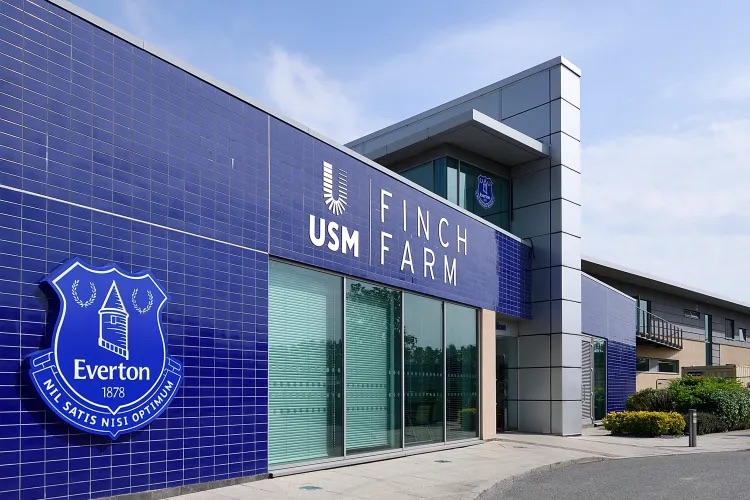
I watch football with my eyes but Everton’s problems are not confined to the pitch. They live at Finch Farm; not in the buildings themselves, but in the culture surrounding them.
The Culture
The old School of Science produced Harry Catterick, Howard Kendall, and Joe Royle. Everton once expected progression, not merely survival.
Today, Finch Farm feels fragmented: recruitment, academy, medical, sports science, and analytics operating in separate silos, each protecting its own processes and reputation. People change, but the wider culture remains. New arrivals are absorbed into it rather than transforming it.
That matters because football clubs rarely improve accidentally. Culture determines whether a club evolves or simply maintains itself.
Moyes and Stability
David Moyes was brought back by The Friedkin Group (TFG) to stabilise Everton after years of chaos. In many ways, he has achieved that. The club looks calmer, more organised, and financially safer than before.
But stabilisation cannot become the permanent objective. My concern is not that Moyes is a poor manager; his record proves otherwise. The concern is that his strengths align too comfortably with Everton’s existing culture of caution and risk management.
Everton often approach matches with a survival mentality, even when greater ambition is possible. Young players also appear trapped in a low-risk environment. Adam Aznou, signed from for around £8m, has barely featured. Whether he succeeds or not is secondary; the wider issue is the message it sends about development and trust.
The strongest defence of Moyes is obvious: Everton needed stability first. That is true, but supporters are entitled to ask a different question now: is this a transition phase, or is caution becoming the club’s permanent identity?
TFG: Professionalised but Not Yet Modernised
TFG deserve credit. Revenue is rising, the new stadium is complete, and the club appears more professionally run off the pitch. However, football modernisation is not the same as commercial stabilisation.
Everton have finished 13th in consecutive seasons, recruitment still feels inconsistent, and the football operation lacks a clearly identifiable long-term identity.
Nick Cox’s arrival as Technical Director was important, though 10 months after the takeover, but meaningful cultural change requires alignment across ownership, recruitment, coaching, academy, and infrastructure. Everton still do not fully operate as one integrated football project.
Finch Farm and the Structural Problem
Everton do not own Finch Farm. The club operates on a long lease originally agreed in 2007, with purchase options reportedly available every five years: 2012, 2017, 2022, and now again in 2025/26. The club declined the previous opportunities.
That matters because TFG may now be able to buy the site at a valuation fixed years ago, potentially below current market value.
But Finch Farm sits on protected green belt land controlled by Knowsley Council. Minor development has previously been approved, but major expansion would remain politically difficult.
This creates a stalemate. TFG may not want to heavily invest in a site they do not own,planning restrictions limit long-term expansion, and Everton continue operating from a facility increasingly constrained compared to elite rivals.
Nelson Dock Is Not the Solution
Nelson Dock beside the new stadium as a possible replacement for Finch Farm. It almost certainly is not. The site is being pursued primarily for commercial development — hotels, restaurants, bars, retail, and entertainment space linked Bramley-Moore Dock.More importantly, Nelson Dock is only around seven acres.
Finch Farm covers roughly 55 acres. A modern Premier League training complex cannot realistically operate on a site that small.Nelson Dock may help revenue generation, but it does not solve Everton’s football infrastructure problem.
The Four Choices
Everton effectively face four options:
Do nothing:
Maintain the current setup and accept the existing ceiling.
Buy and upgrade Finch Farm:
This is the most realistic option. Purchase the freehold and invest £10–15m modernising the site, while accepting green belt limitations.
Build a completely new training ground:
The ambitious solution, but likely costing £100–200m.
Hybrid model:
keep Finch Farm for the academy while building a separate elite first-team facility elsewhere. Probably the best football solution, but also the most expensive.
The Real Question
Everton’s biggest problem is no longer survival. The club now has:a new stadium, more stable ownership, improving revenues, and greater financial control.
The next step is deciding what Everton actually wants to become. No club transforms overnight, and supporters should recognise the scale of the decline the current ownership inherited.
But stability alone is not progression. The 2025/26 Finch Farm option is more than a property decision. It is a test of ambition.
If TFG choose not to modernise the football structure, whether through Finch Farm or a new elite facility, they may effectively be accepting that Everton’s role is to remain stable rather than become genuinely competitive again.
And once a club accepts its ceiling, lowering expectations becomes far easier than raising them again.
Reader Responses
Selected thoughts from readers29/05/2026 23:16:17
Steve you are correct on that front for many fans.
30/05/2026 08:14:50
Do we already own Nelson Dock or are we just looking to buy it? I think it's a good idea to extend the footprint around the stadium.
I'd be interested to know how fans have found the new ground over the course of a full season. Progression and developing the club doesn't have to mean fleecing your own fans at a home game. It would be interesting to read one of those comparison articles where the price of a pint and a hotdog or burger is still each PL ground.
Steve, I would agree that I wouldn't be anywhere near as invested in the other stuff if we were winning trophies. I think it is important to have some knowledge though. While not Paul the Esk level knowledge, I should show some interest.
Jerome, I think from a business owner perspective, it's a no trainer to buy Finch Farm, especially if it's below market price.
30/05/2026 10:44:05
Kieran#3
They are negotiating to buy Nelson Dock.North Liverpool Development has a further 200 acres to develop.I have not researched that.You would have thought it was a no brainer for years.I think Fans feeling regarding the new Stadium would be mixed ,alot would be as Stevie said looking for wins, losing in a new seat isn't much comfort.
Steve#1
Steve, I get it – trophies cure everything. But Palace, your example, built for them.
Crystal Palace spent £20m on a Category 1 academy redevelopment alone, with £30-40m total on youth facilities, including over £10m just on pitches.
Everton built Finch Farm for £14-17m back in 2007 and have had a £4m council loan in 20 years.Finch Farm as a training facility is worth similar in value today, to when built.You can't win cups when your background is set to survival, not silverware, in the Premier League
31/05/2026 05:49:00
Jerome, a chunk of twp hundred acres means bars, restaurants, multistory car parks, apartments etc. Whether the revenue from it all would go to Everton or the Friedkin group would remain to be seen. I suppose it would depend on which entity buys it.
31/05/2026 07:39:46
Kieran#5
Nelson Dock is apparently of interest to TFG for that reason.The 200 acres North Liverpool Dock is to be developed and the Peel Group are probably pursuing that.
Finch Farm may be a Stalemate situation, because Moshiri never attempted to buy it and TFG have never been mentioned.
It has occured to me that Finch Farm could be a victim of this and in survival mode for a long time, protecting budgets and jobs. When you contrast what was going on elsewhere, where lunatics where running the rest, maybe Finch Farm was the lesser evil.
TFG approach both structural and playing wise on the Everton Football side seems to be extreme caution, in comparison their Roma approach. This seems to fit the prevailing Culture.The conundrum is where is the push coming from.Everton may have been worse managed than we feared.We are lucky we have a new stadium and they had to get a bail out for that
If Finch Farm is the last remaining piece of the old regime that hasn't been touched, that's not because it's good – it's because it's invisible. And invisible problems are the hardest to fix.
My money would be on a new purpose built site.
06/07/2026 04:17:01
Thank you Jerome. Youth developmement is a subject dear to my heart & the lifeblood of any club.
Whilst we may not compete with some of the great European academies like Barcelona's La Maiesa, Ajax, the understated Schalke & Machester Unied's academies.Finch Farm simply must do better.
There is something inspirational about training & playing in the shadow of the stadium, so location is important. Nelson Dock ticks tat box, with thextra acreage offering opportunity to build a mini stadium.
Add Your Thoughts
Only registered users of Evertonia can participate in discussions.
Or Join as Evertonia Member — it takes just a few minutes and will allow you to post your thoughts on artices across the site.
29/05/2026 20:42:59
Jerome, I accept the issues/points listed above, but and it's a big but, if Everton emulated Palace and lifted three trophies inside three years (FA Cup, Community Shield and Europa Conference), all of the above wouldn't even be a talking point.
Fans crave success, the stuff going on in the background is largely irrelevant.